
The Tree of Heaven Project
The Tree of Heaven Project or the Ailanthus Project is comprehensive research and development project to process and reuse the timber from a tree felled in a family garden in Kensington, West London.
The Ailanthus grew steadily in the back garden a Kensington home for more than 50 years. A young family moved in with two boys, who spent most of their childhood climbing, swinging from, sheltering under and generally admiring the tall tree and its generous canopy.
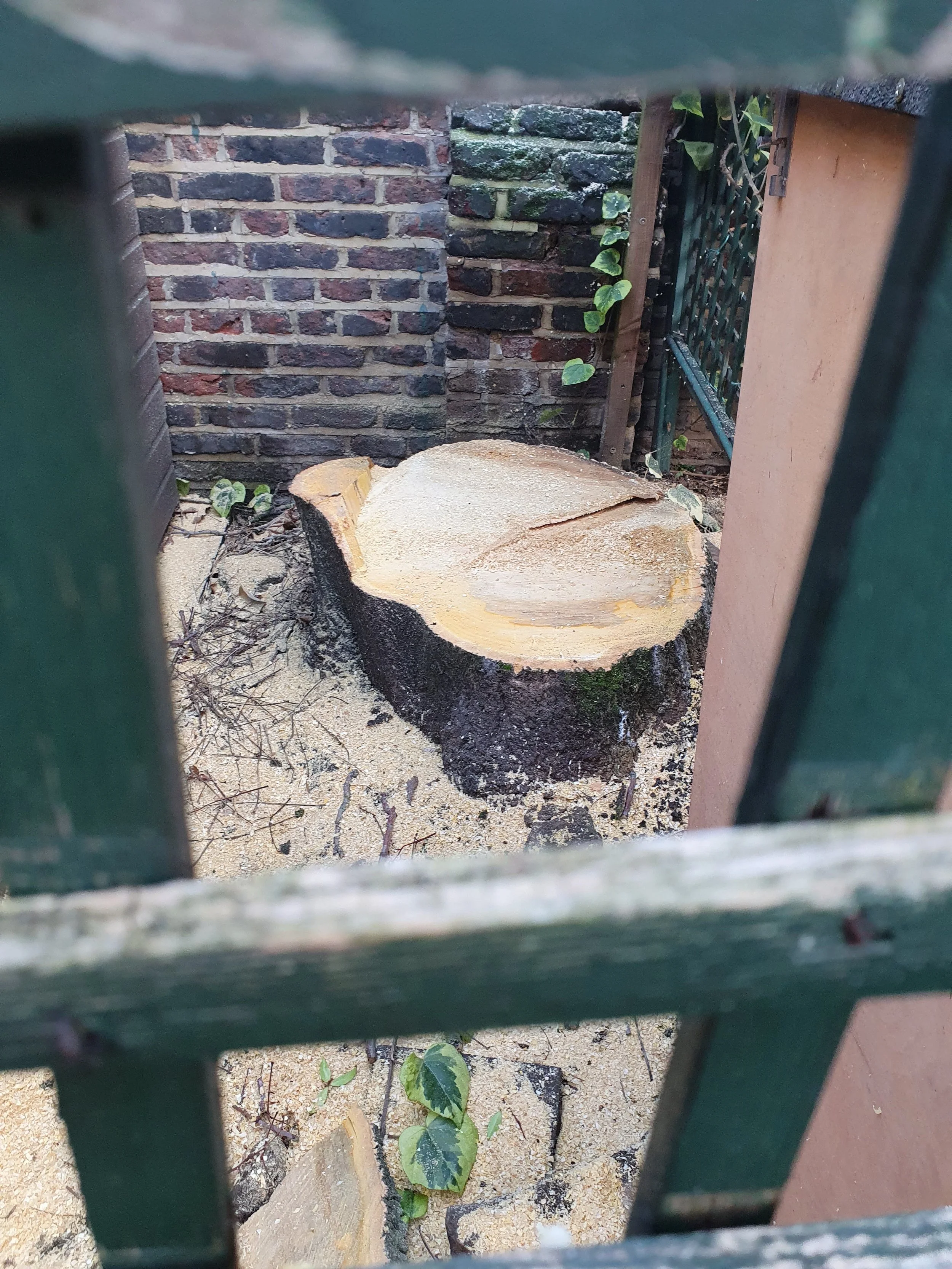
Two years ago the owners identified a fungal disease in the base of the tree and sadly the tree was marked for felling before it fell down and hurt somebody. Rather than shipping in tree surgeon for quick chopping down and throwing the timber into the woodchipper, the owners decided to do something different.
To honour the unique provenance of the tree and their collective family memory, they decided to save the trees timber and engage woodworker and an architect to make the best use of the timber. The timber will be used to make two writing desks along with numerous architectural details including stair rails and counters.
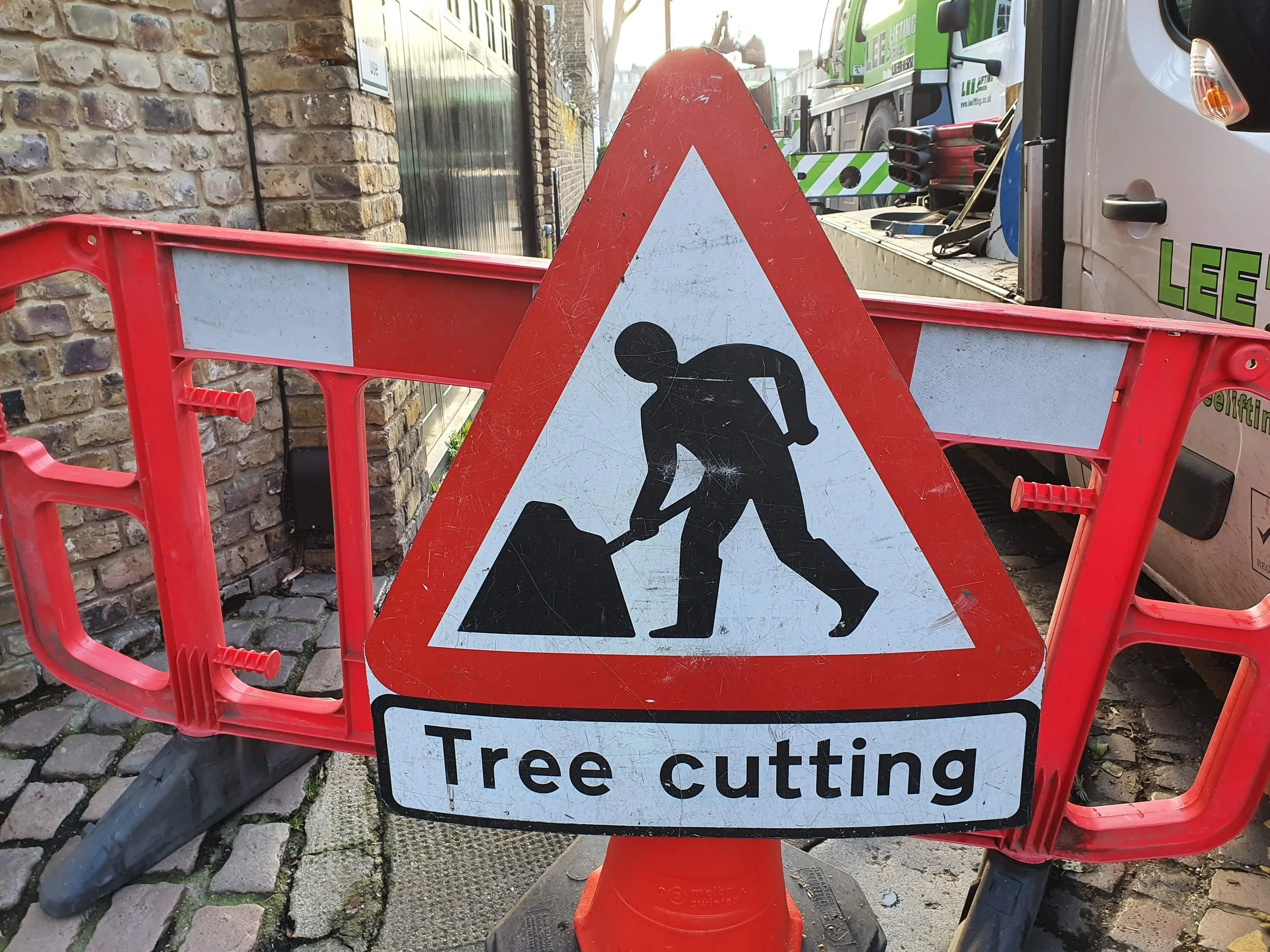
The Tree
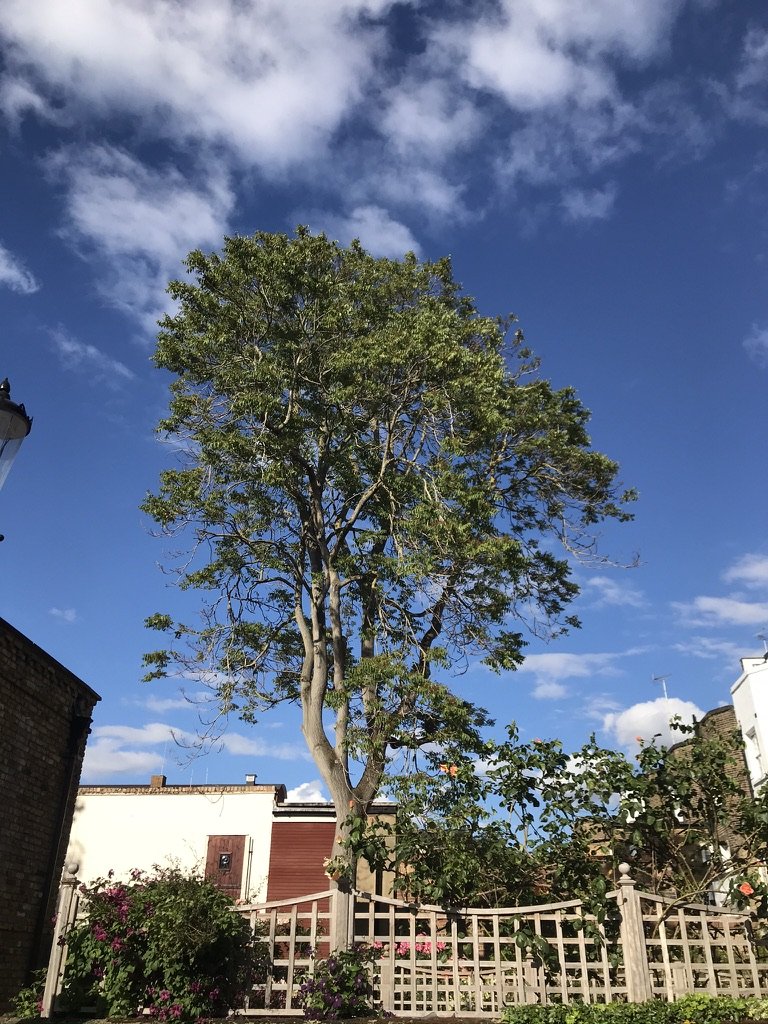
Ailanthus altissima /eɪˈlænθəs ælˈtɪsɪmə/, commonly known as tree of heaven, ailanthus or varnish tree is a deciduous tree in the family Simaroubaceae.
Unlike other members of the genus Ailanthus, the Altissima is found in temperate climates rather than the tropics, and native to central and north east China as well as Taiwan. From the 1700s onwards it has been cultivated in North America and Europe.
Its appearance most resembles the European Ash, with its pale, yellow white timber and its fans of pinnately compound leaves.
Pest!
The Ailanthus is not a popular tree, not amongst horticulturists and not among the random people responding to my social media posts and blogging. It is extremely invasive when it is planted in non-native places it upsets the local ecosystems in numerous ways. Not only does it propagate much faster than the native species it has crowded next too but also secretes chemicals into the soil to kill off its rivals and any animal species it might consider a threat, potentially leading to extinctions and/or negatively effecting bio-diversity.
In the urban environment, where our tree had been growing for 50 years plus, the tree can cast itself across various gardens and parks, causing the same problems as in rural areas plus it can hit the build environment. Numerous cases have been recorded of the Ailanthus tree spreading its roots under the foundations of buildings, damaging sewer systems and pulling up pavements.
Its quite a git.
EU Regulation lists the Ailanthus as an Invasive Alien Species. This legislation still applies in the UK. It lists Ailanthus altissima as one of 36 plants that you should not plant or cause to grow in the wild but in addition are banned from sale and gardeners possessing them should undertake measures to control them.
The Royal Horticultural Society advises “If you already have these species in your garden or on your land, you are not likely to be prosecuted simply for having them. However, you are advised to control them and, for those 36 plants listed by EU, you are required to take all possible steps to remove them, even if you didn’t plant them. It is also your responsibility to ensure that they are not allowed to spread.”
Felling
Tree surgeons and crane operators are highly skilled legends.
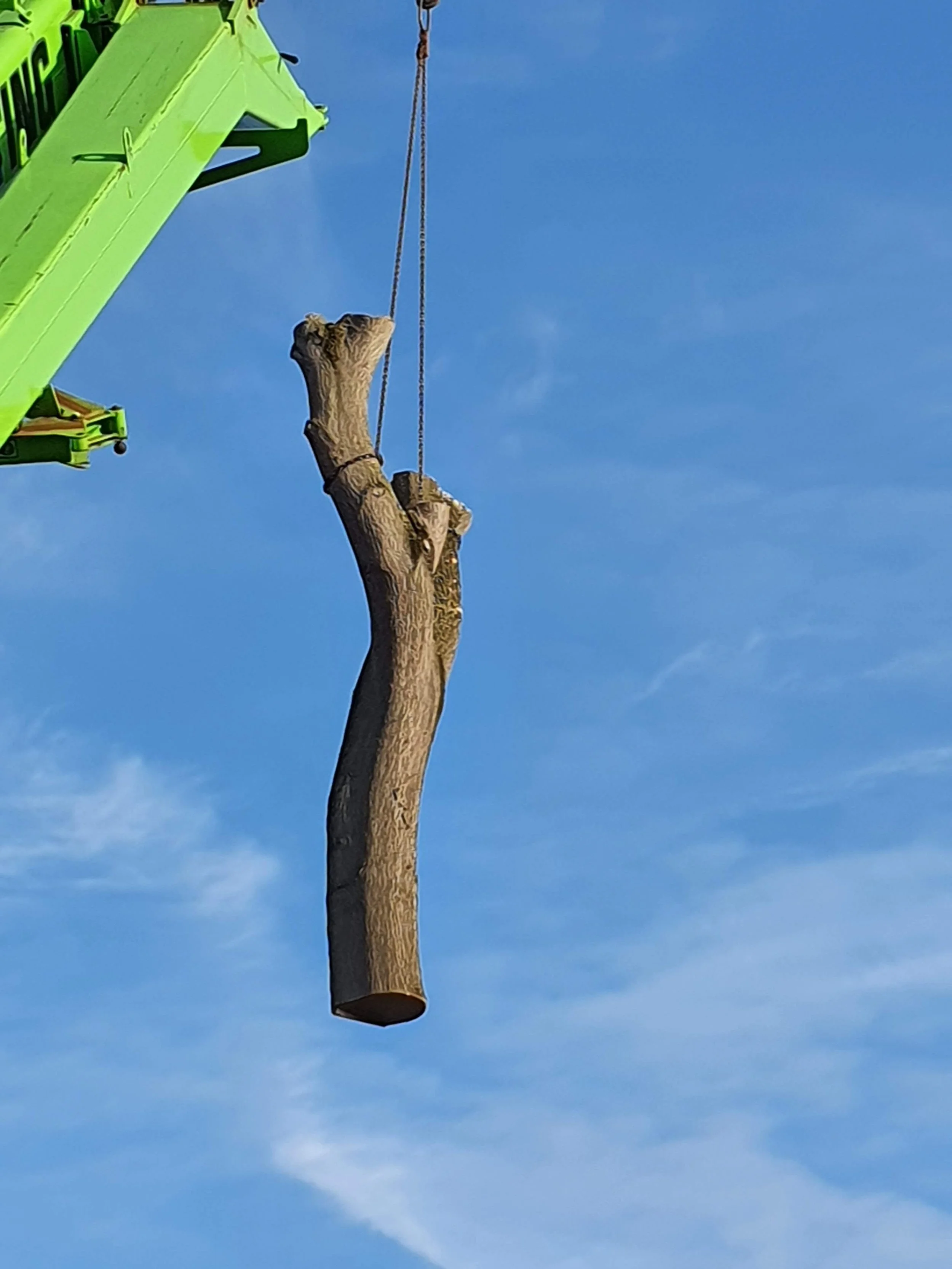
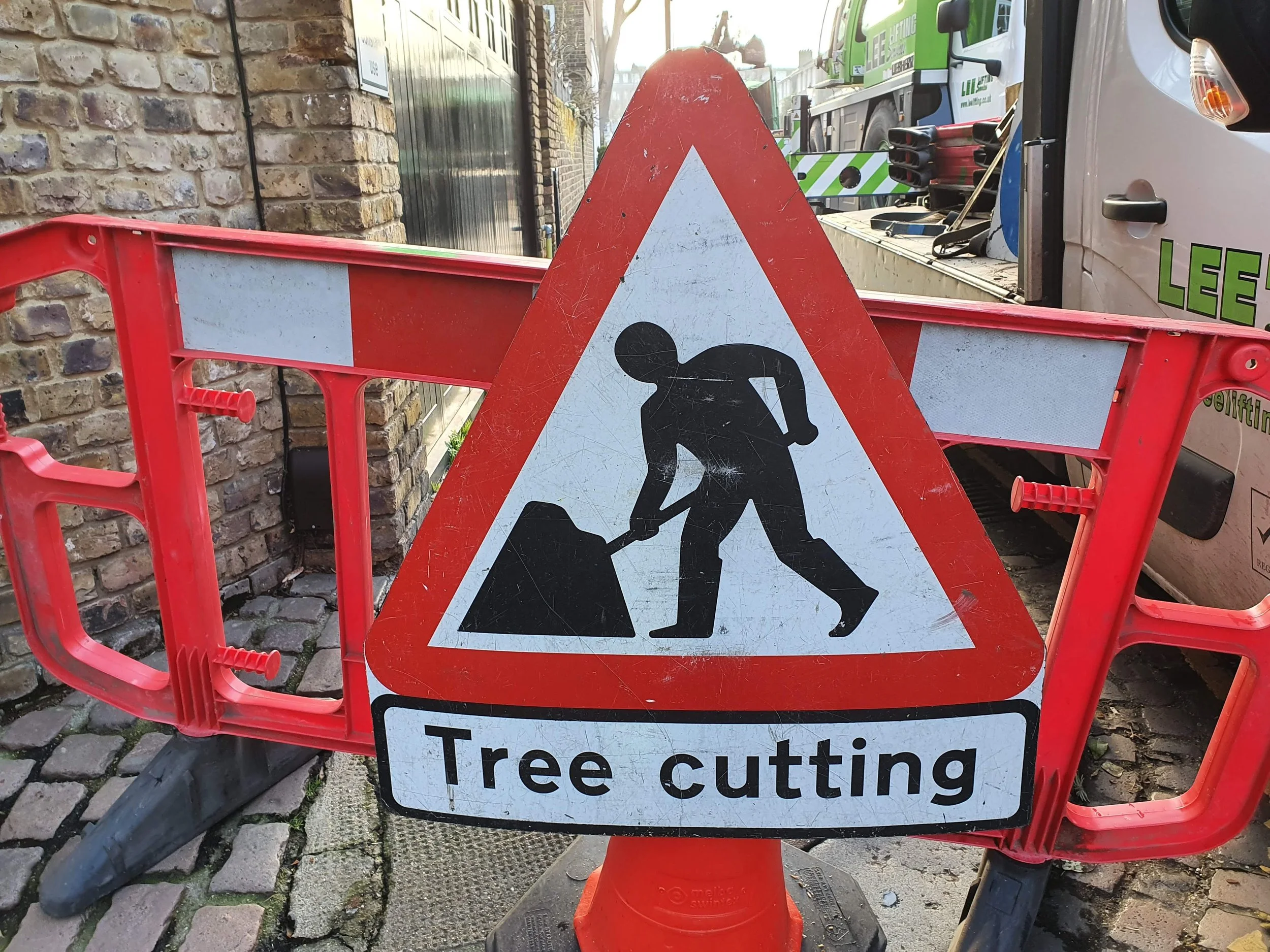
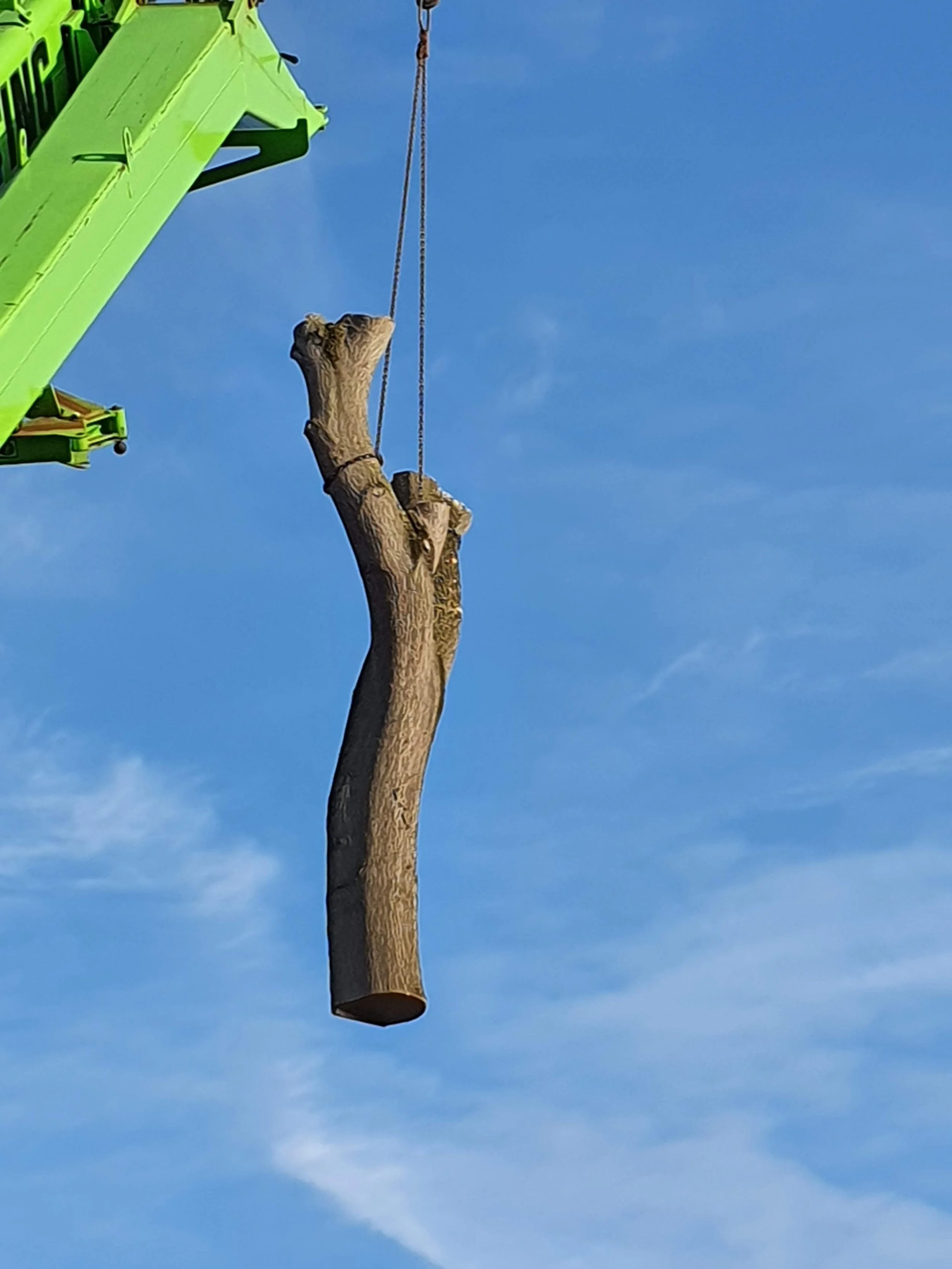
After a good deal of consultation with me and the client, the tree surgeon clambered up and around the tree, shackling parts of the crown and cutting them free. These upper branches are unusable for timber so they were removed in two large pieces with brash and all attached. It was very dramatic to see what was essentially a small tree pulling away and floating through the air. I stood and watched and nodded and gave the thumbs up and tried to keep warm in the cold January weather.
Then the surgeon worked his way downwards, applying precise cuts at positions we agreed to help maximise the yield while the crane company worked their magic. The communication between the crane driver and their man on the ground was amazing. The driver sat in the cab on the street, unable to see the tree, the surgeon or his colleague but managed to pull out all the material, including the trunk from its base from the small garden and onto the road without touching a thing. The client has a carport just below the canopy of the tree and not one piece of the felled tree touched it, let alone crashed through it, as predicted by many.
The chipper is a beast that snatches the brash and smaller branches and devours them. The background, bone crunching sound is a constant reminder of what usually happens to felled trees but also of the triumph of the day . Whatever we salvage of this tree is better than the greedy demands of the chipper.
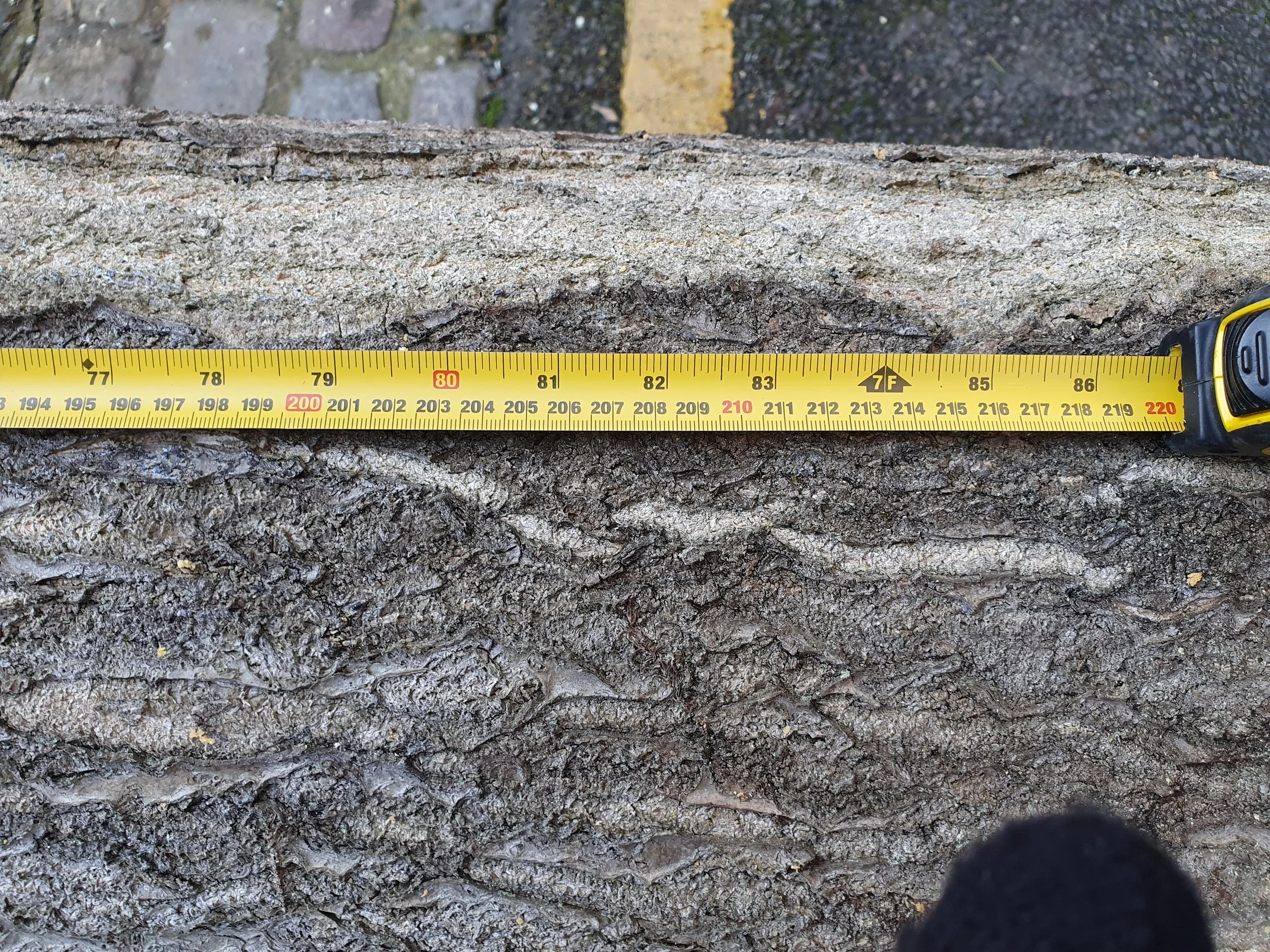
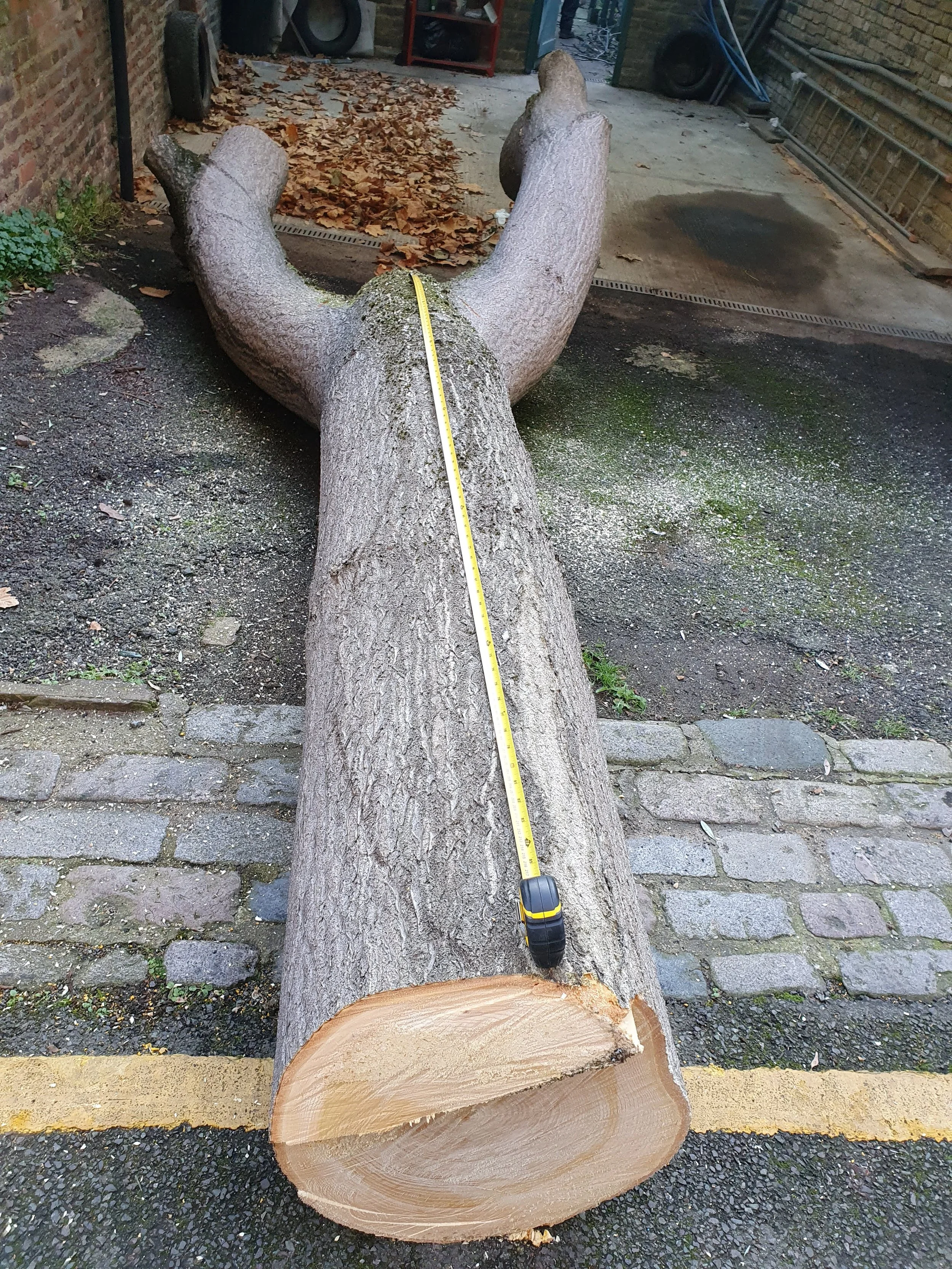
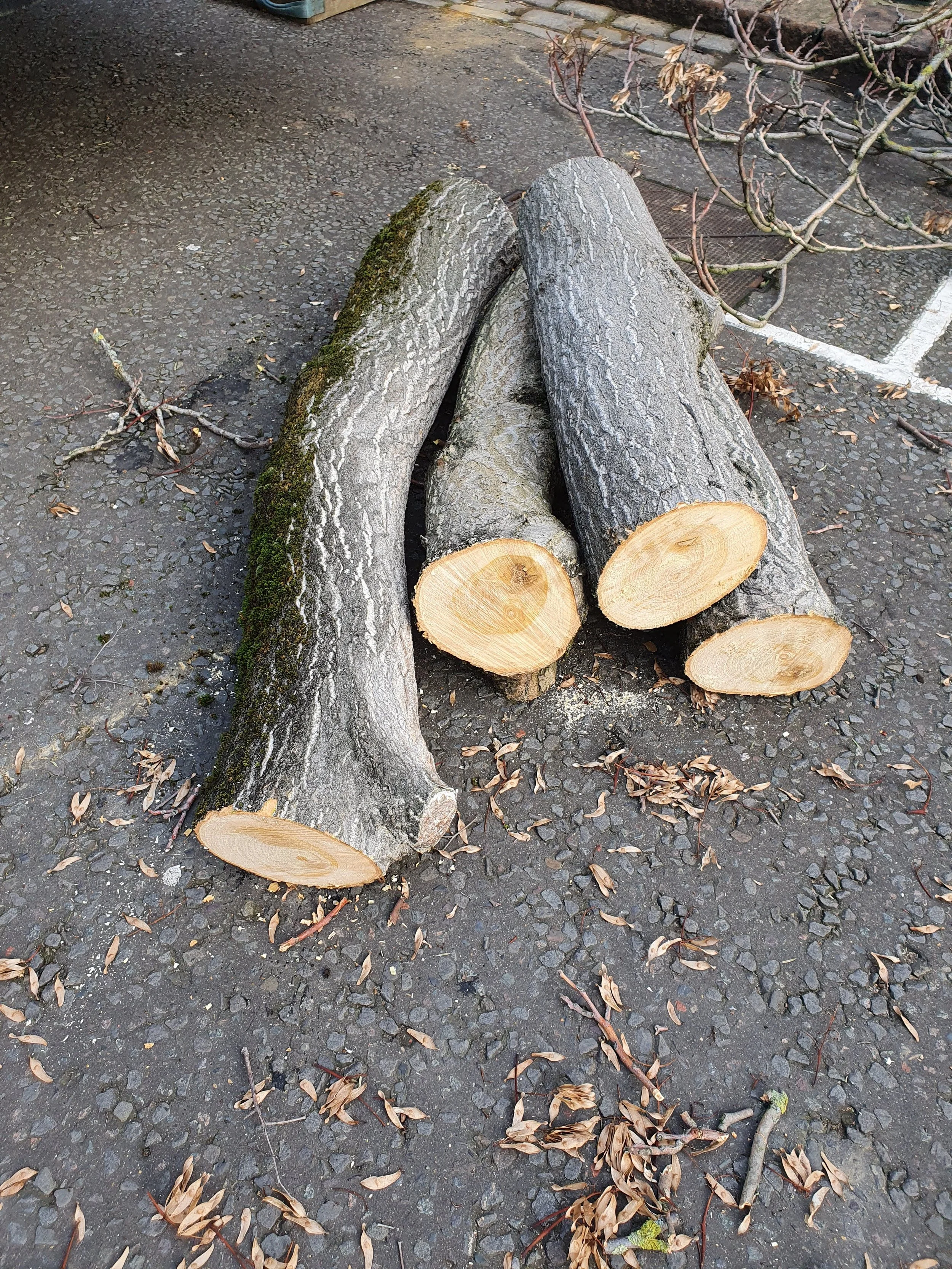
The yield at first view seems larger than predicted, the tree is in good condition above the root. There is a little rot or disease at the base of the tree but it has been caught at the right time and only extends into the timber about 15cm. The trunk of the tree was felled in two pieces at 220cm long, which as an initial observation is adequate yield for the proposed projects. Desktops, for example can be made from the trunks, while the two major limbs will offer material for leg posts and narrow rails if they can be put in the kiln. Further to that, I retained countless small rounds for turning blanks and making greenwood items for the garden.
The mill and the Milling
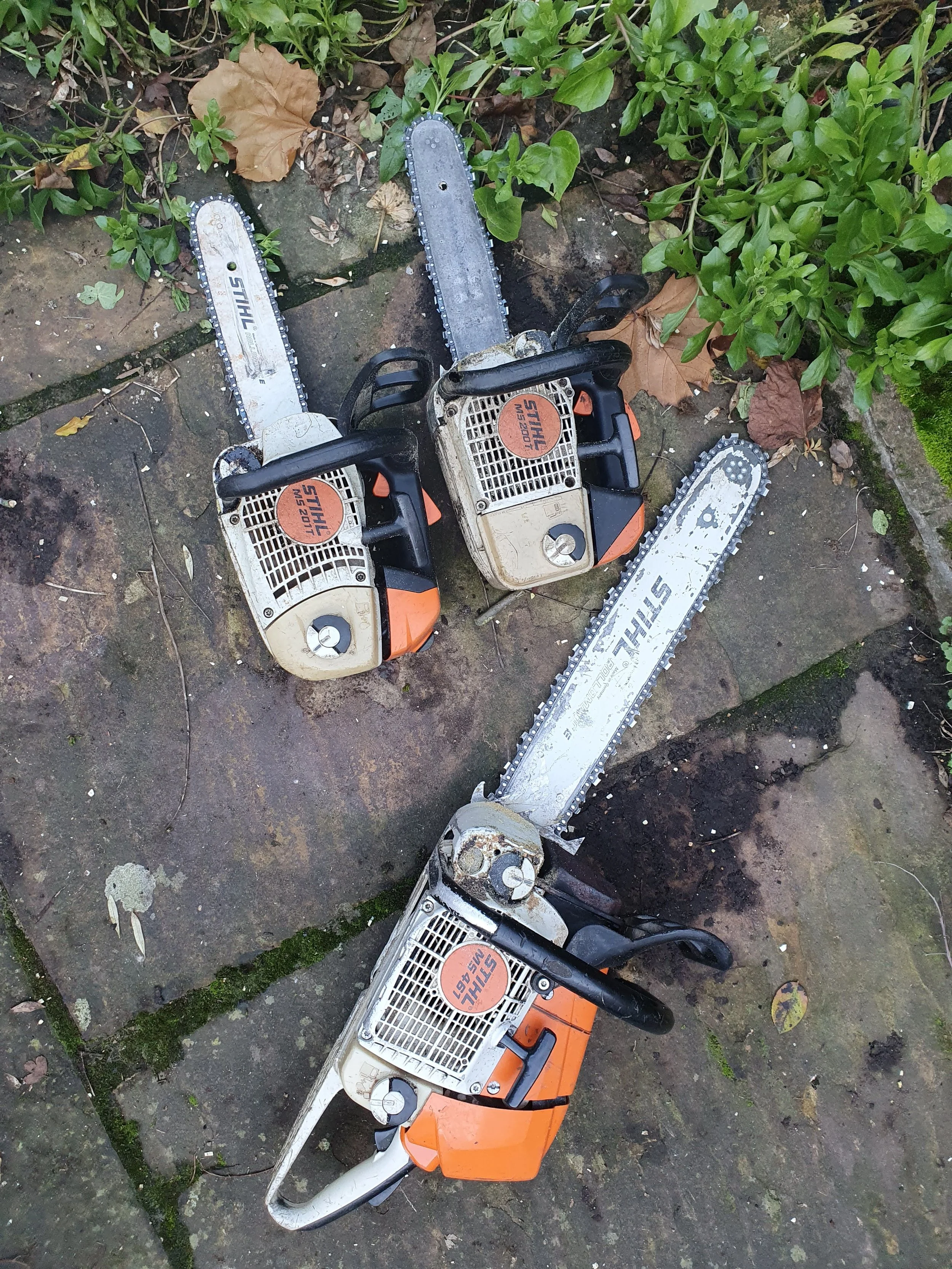
The mobile mill or ‘Alaskan’ is a chainsaw attached to aluminium extrusions, which rides along a precut, flat surface on one plane of the tree trunk to produce identically thick cuts through the timber. First, a regular ladder is attached with nails to one side of the tree and the aluminium extrusion is run along the ladder and the chainsaw which is suspended below created the first, straight cut. Then we elected to cut 38mm cuts through the timber.
The milling was hard going, the sapwood is very gummy, especially just beneath the bark and the chainsaws clogged and became blunt after two 2 metre passes. The mill operators were slowed down considerably and needed to return the following week to finish the job.
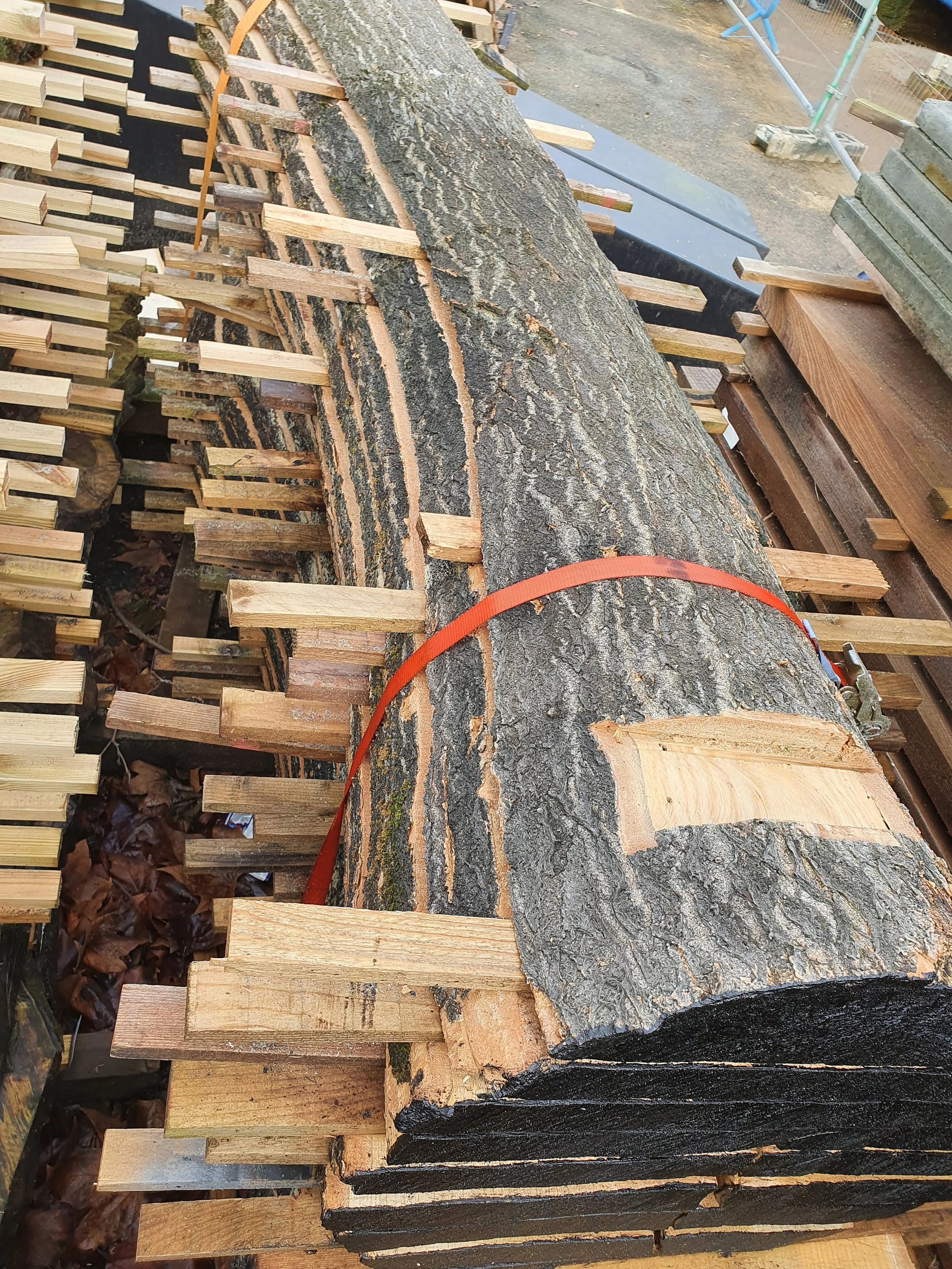
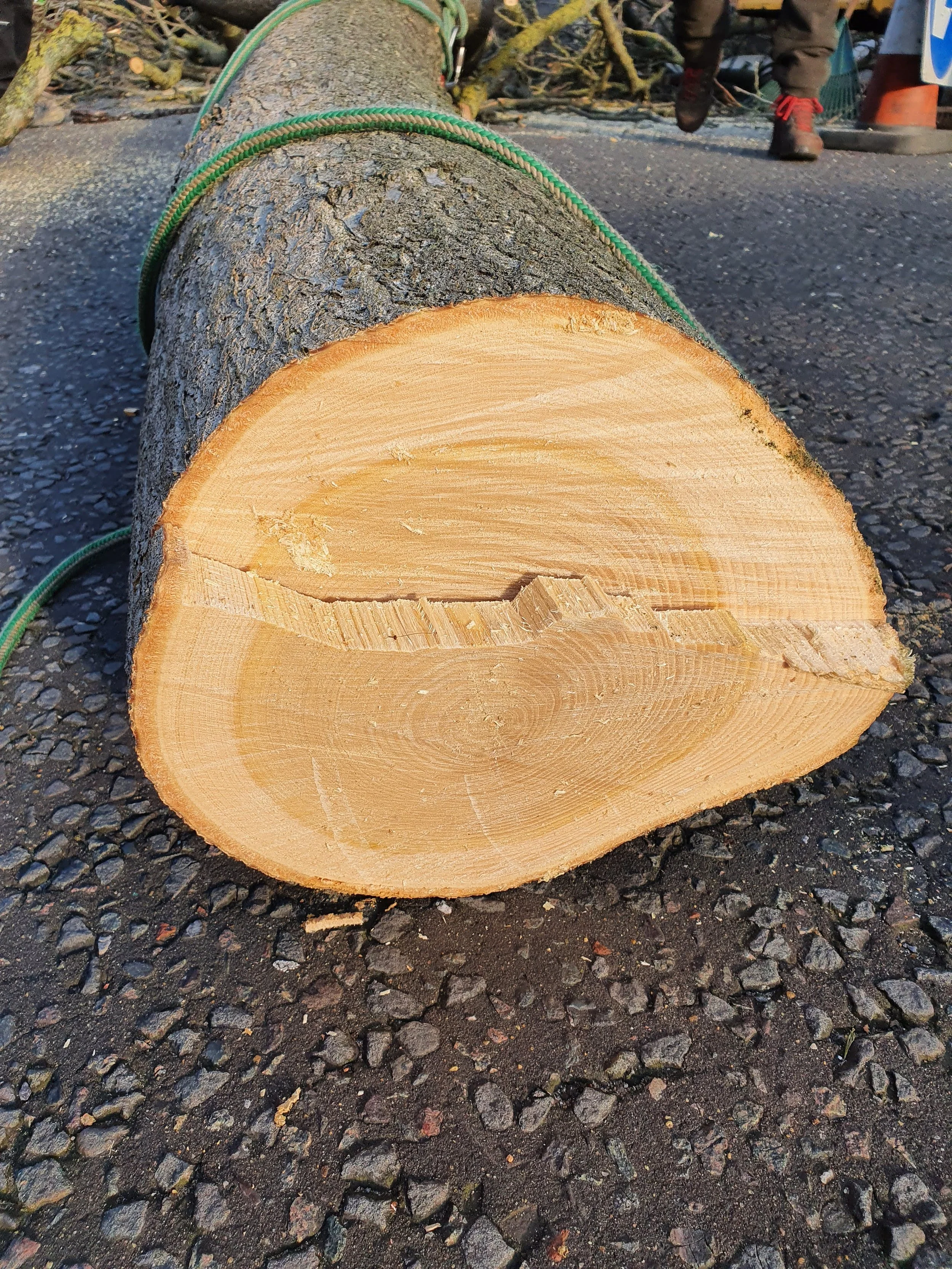
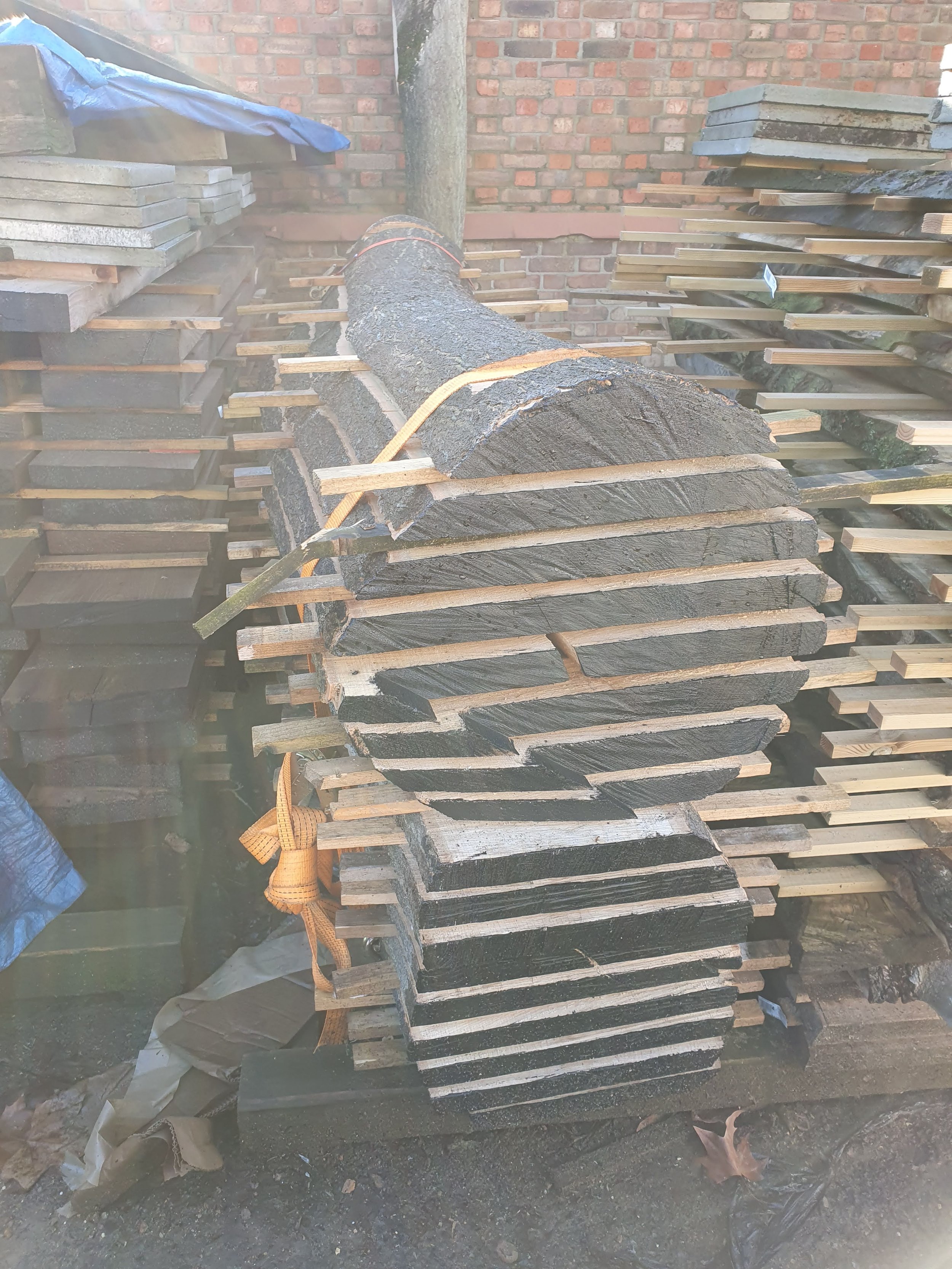
Shakes or cracks in the timber are the most common challenge when it comes to converting threes into usable timber. Heart shakes occur along the centre of the tree, where it’s the oldest and most fragile. The middle boards, and especially the very centre board is susceptible to this and when we placed our central board onto the sticked pile there was a very loud crack as the board parted down the middle. Although this a challenge to the yield, the central board obviously very wide compared with the outer ones so two lengths of usable timber can be taken either side of the crack.
The other boards fared well with the exception of a few felling shakes at their extremities, and but only 10 to 15cm from the ends. Felling shakes caused by the trauma of the felling process.
The Timber
As a European furniture maker, I know very little about the Tree of Heaven and in the next few weeks I endeavour to educate myself. I had read that the timber resembled European Ash and was noxious when milling. As we started to mill through the body of the trunks, the characteristics of this Ailanthus tree started to reveal itself, although, the timber was not smelly at all when cut, the timber did indeed resemble the pale, grey-yellow of Ash. The very heart is a golden brown and the sapwood paler than the main body but similar enough that some will be robust enough for use.
Yield
There are numerous blanks ideal for turning, especially those cut from the confluence of the limbs or trunk and limbs, where the timber is more colourful and varied in its figure. Elsewhere, there are potential greenwood working opportunities and at the bottom of the priorities, some rounds and odd shaped but small pieces for outdoor furniture.
Re-milling & yield count
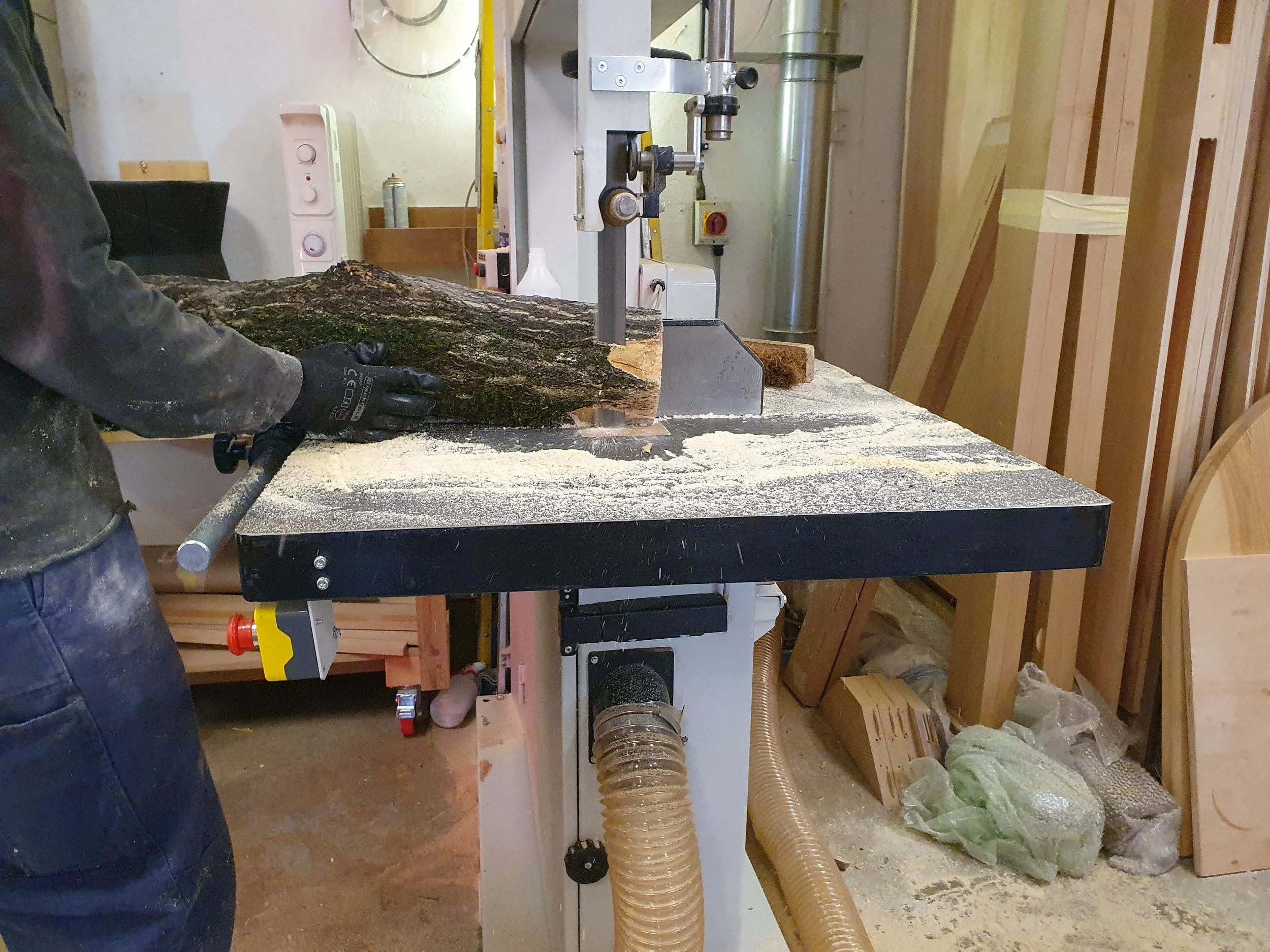
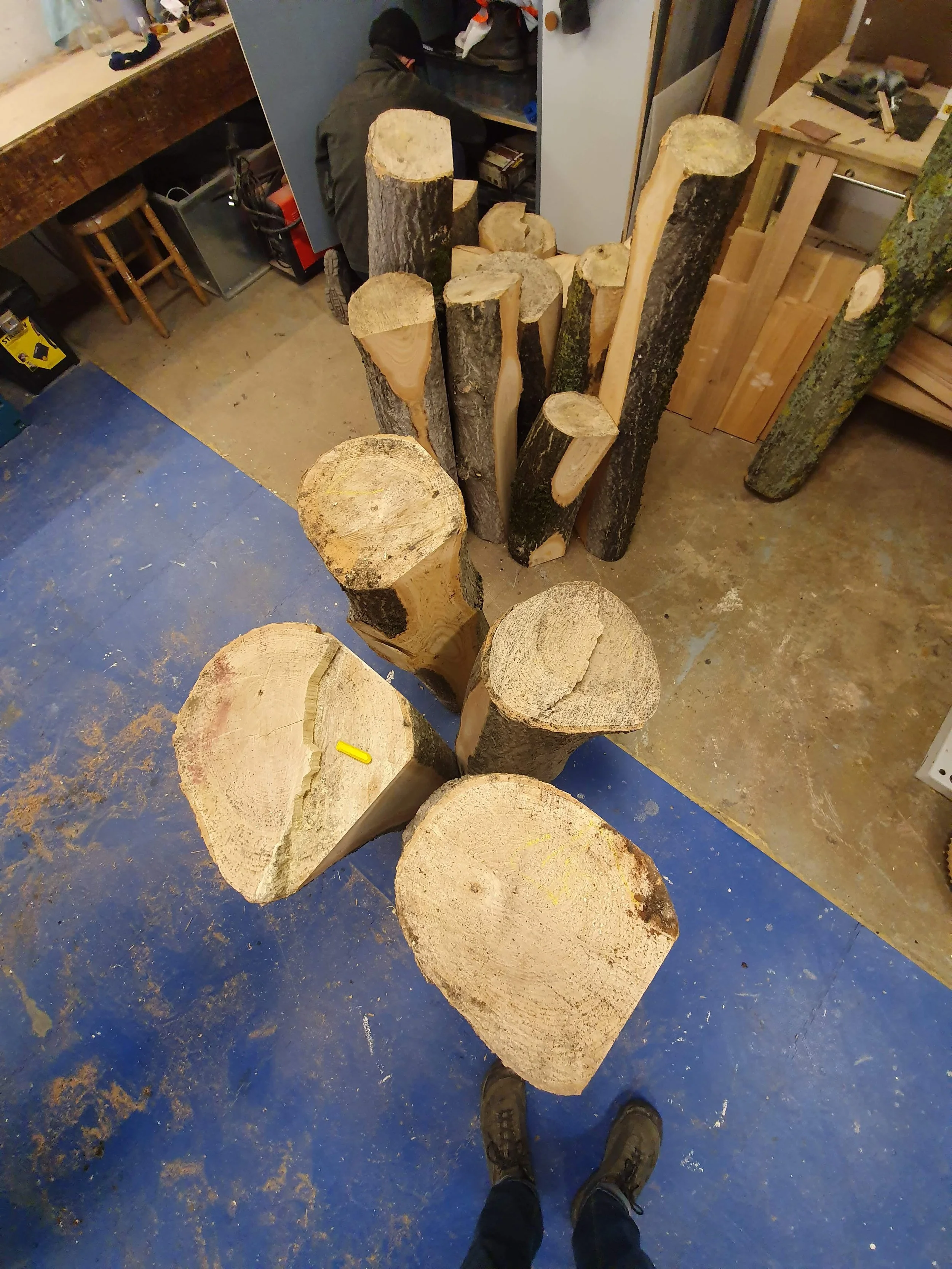
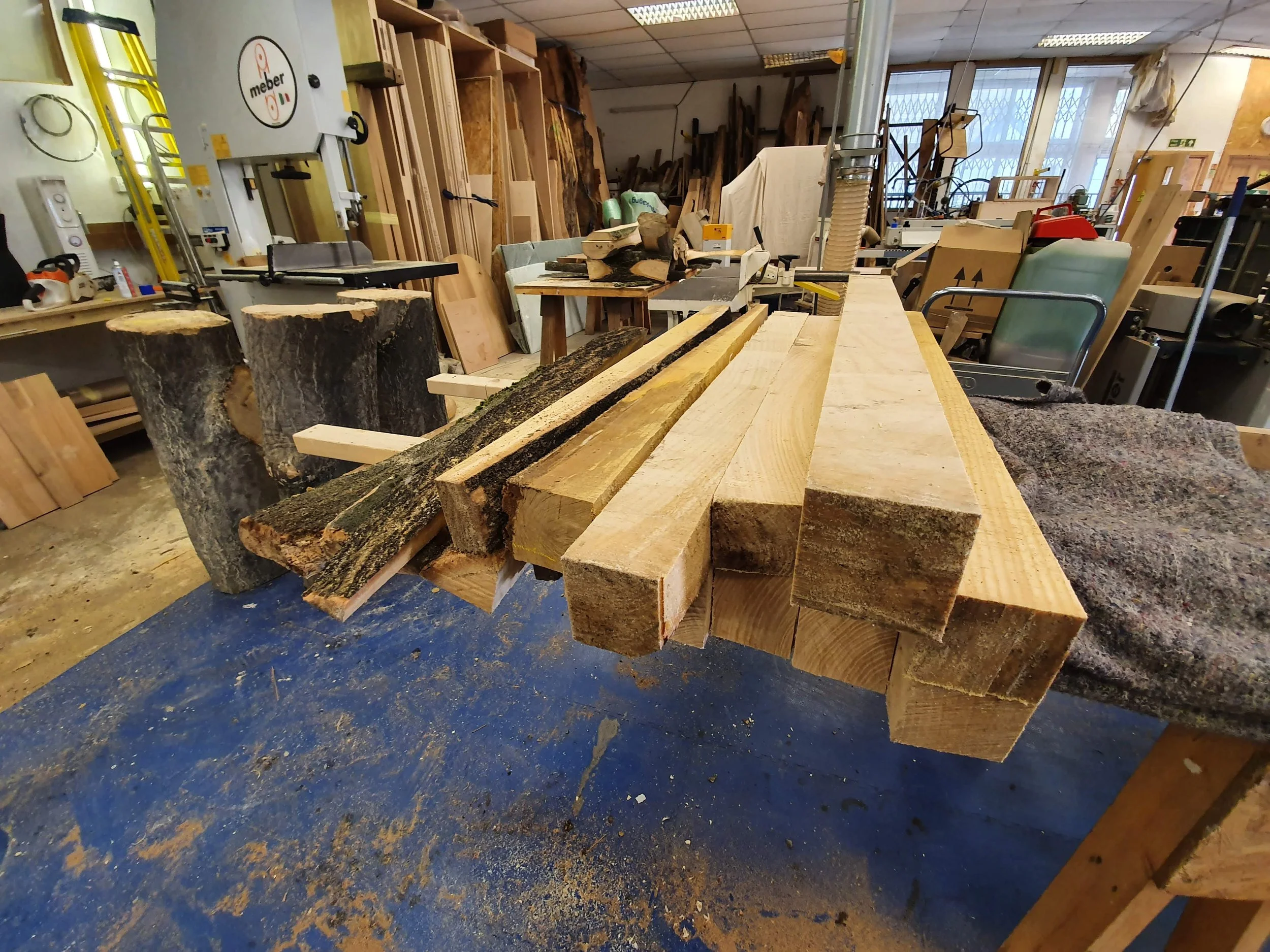
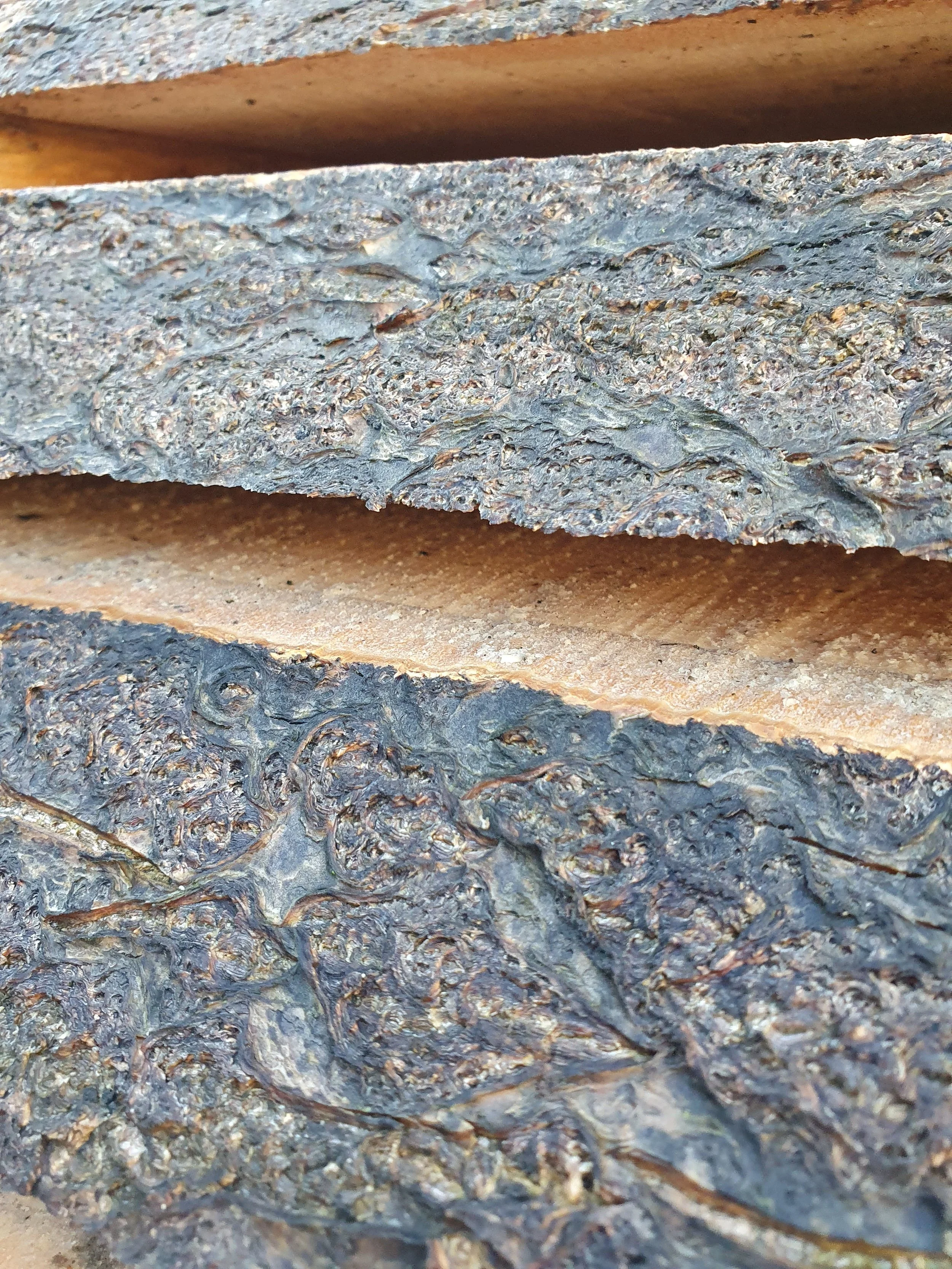
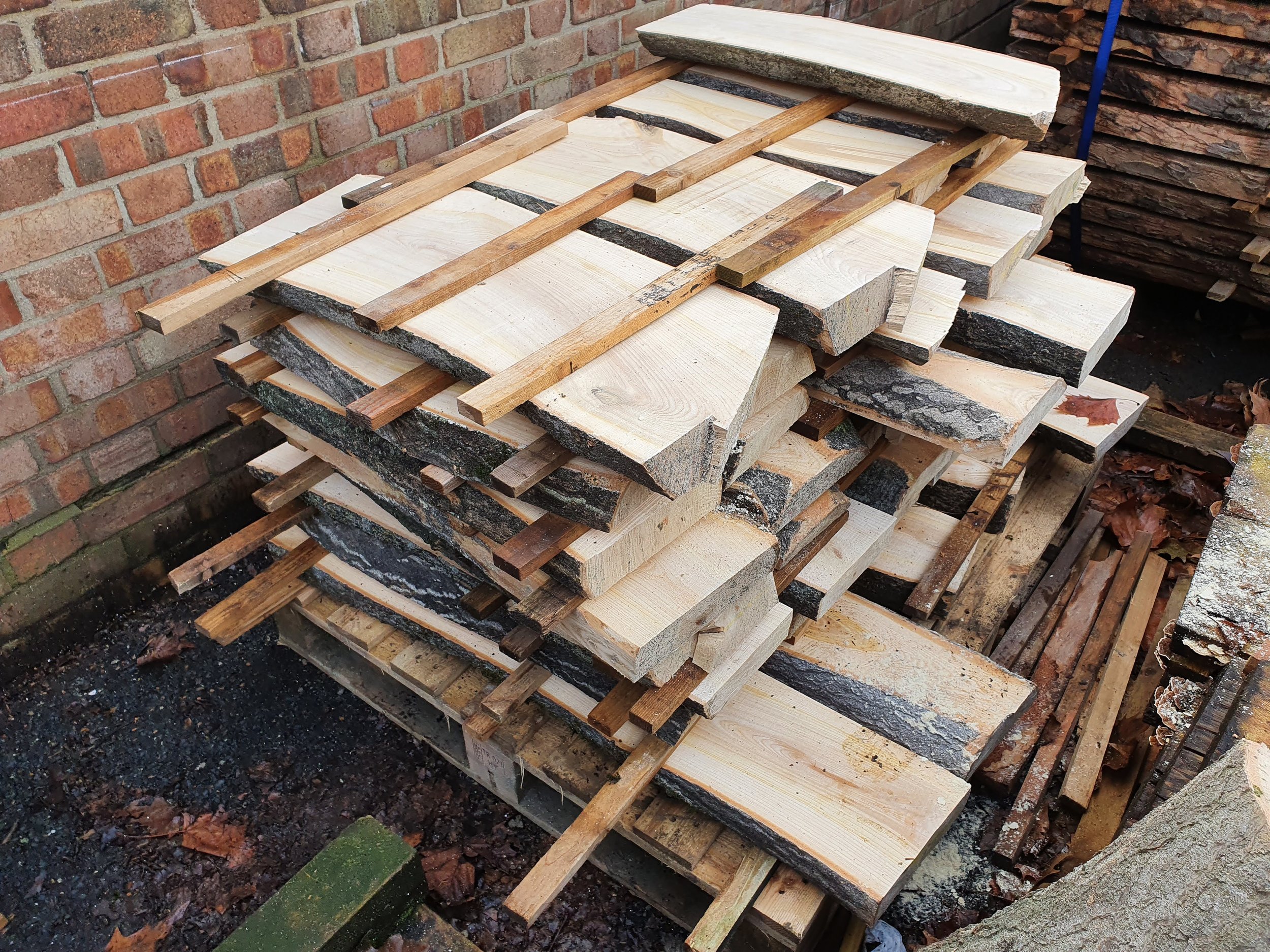
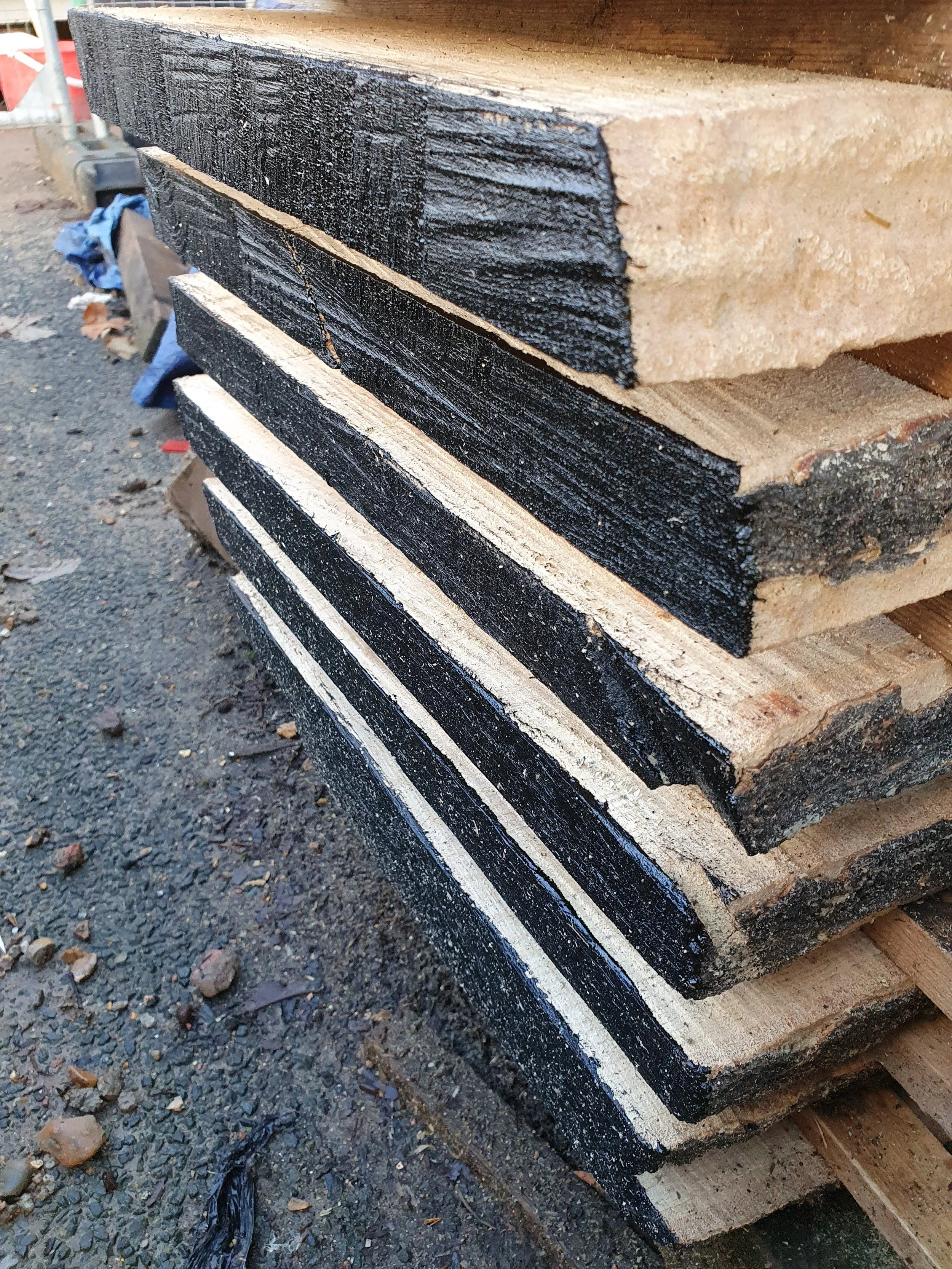
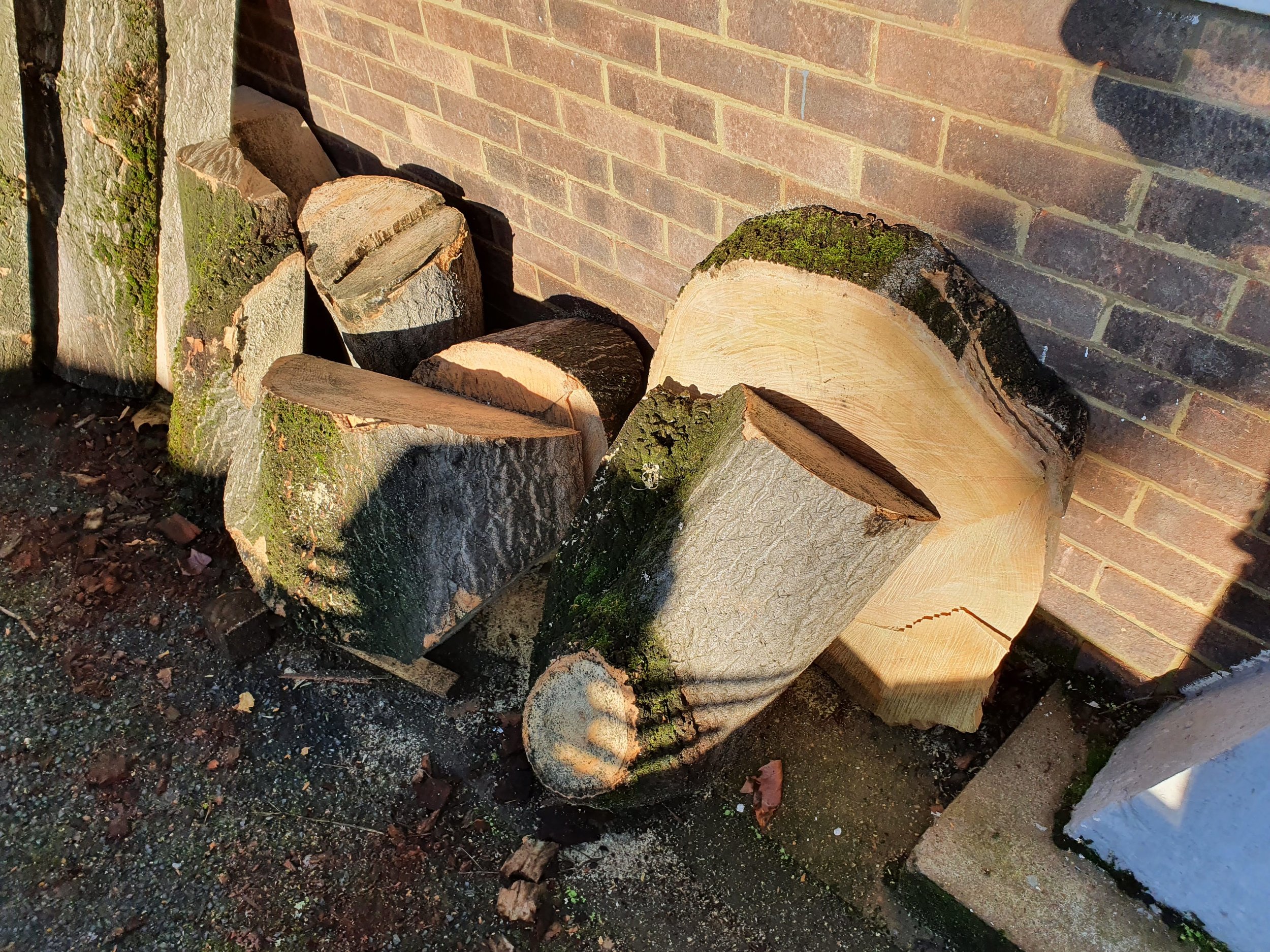
A month later we remilled and sticked the timber from the Ailanthus tree felled in Kensington earlier this month. A small tree, of a species we didn't know has afforded us a generous yield. Wide 35mm boards, endless short 54mm boards and 75mm x 75mm posts. And some interesting blanks for turning too! Thanks again to Mike and everyone at @goldfinchfurniture for helping me with this early stage of the project.
Year 2 - Stock Count
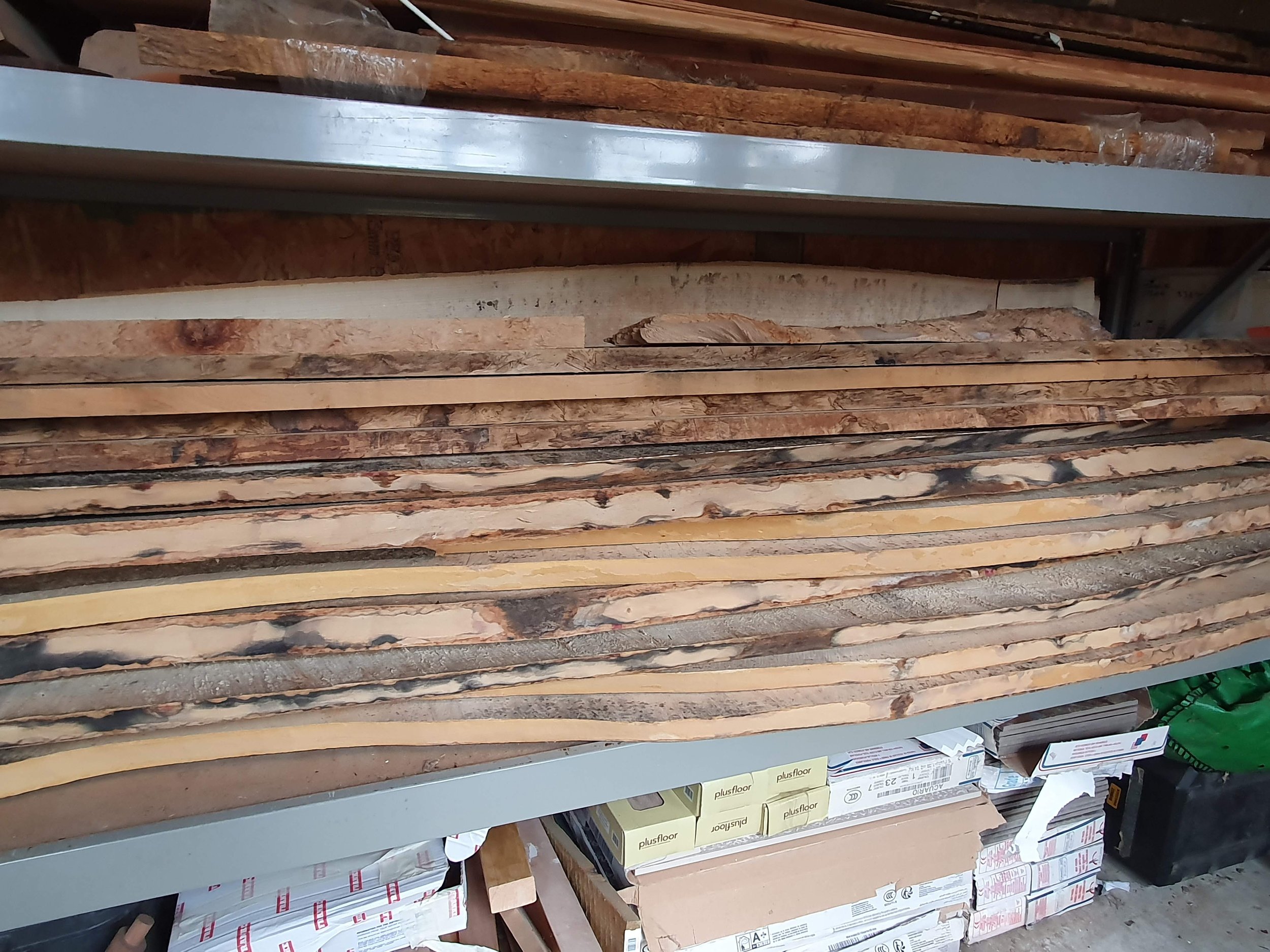
After 14 months air drying and a few weeks in the kiln, the processed boards of the Ailanthus tree are nearly ready to use. Now the timber has been moved to the workshop for further acclimatisation.
The wood has fared well through the process bar a few shakes and splits, the majority of which occurred shortly after milling. The boards where cut through with the chainsaw and I remember watching as the tension in the timber pull the boards apart almost as soon as they hit the ground.
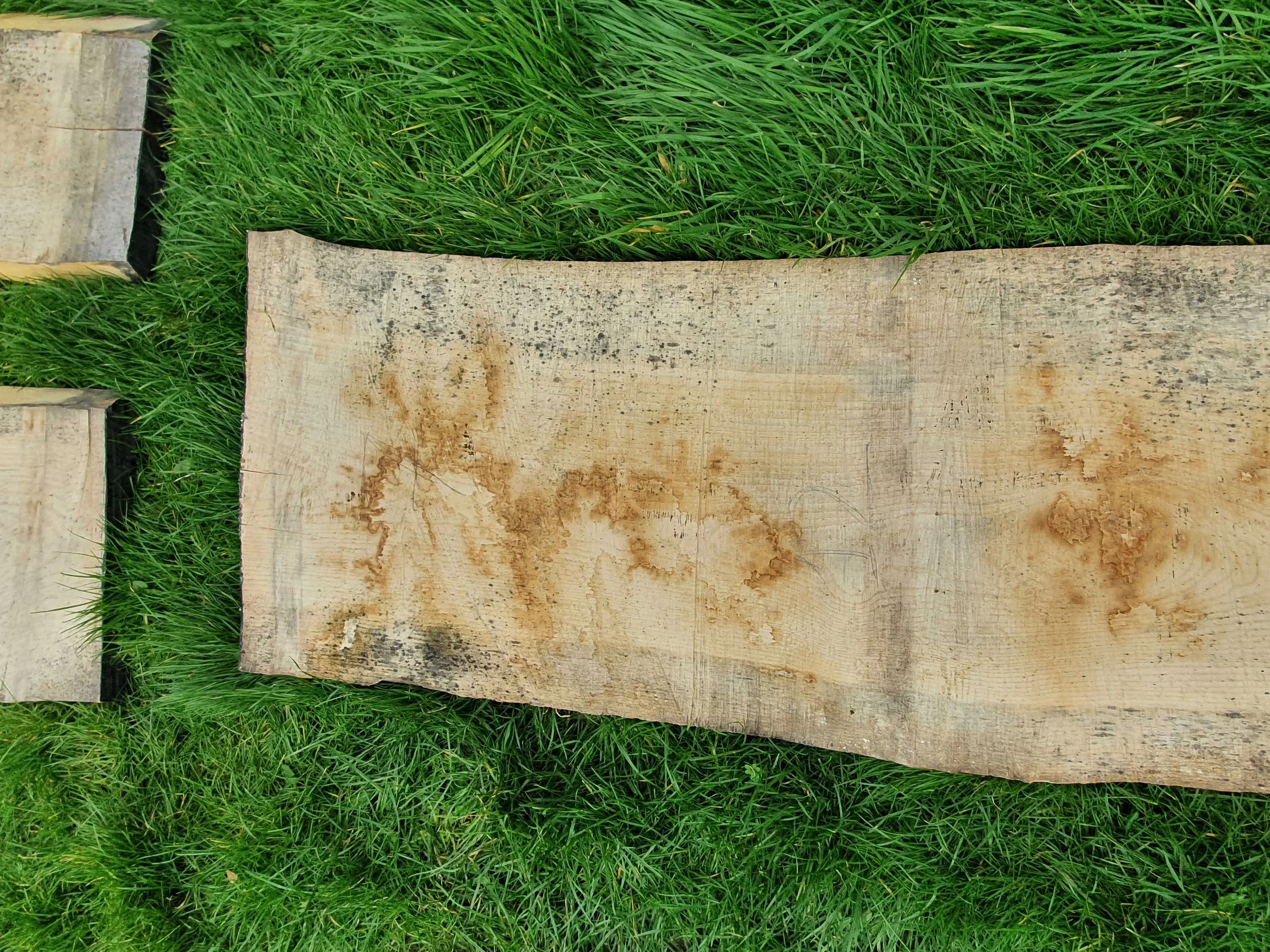
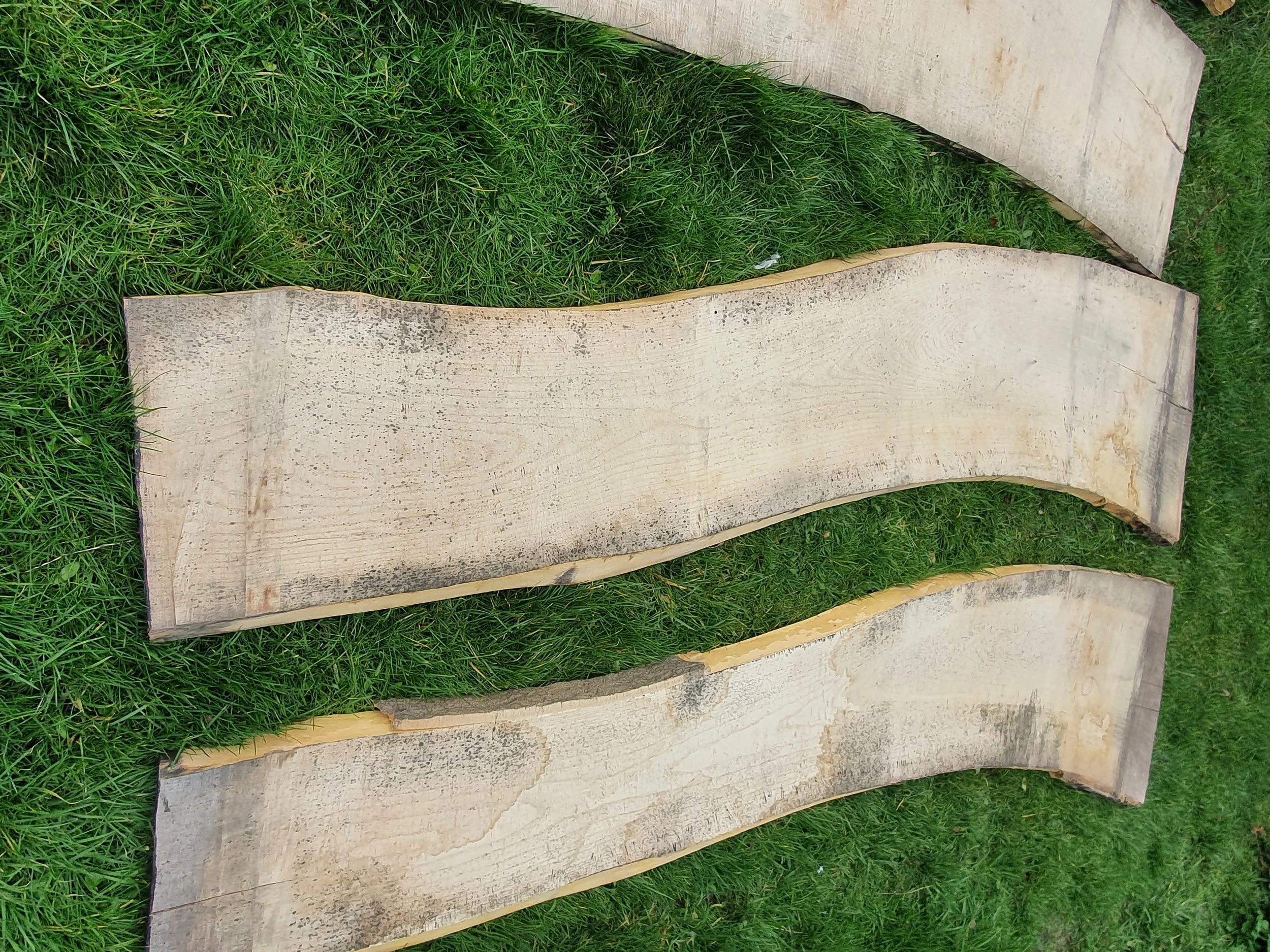
Of all the boards that were milled, the top half of the tree, a wind swayed section seen in the above photo is very curved compared to the straight portion of the lower drunk. The client has requested a pretty modernist design for a desktop and the natural curve in the timber is sadly not appropriate to use this time around.
Samples
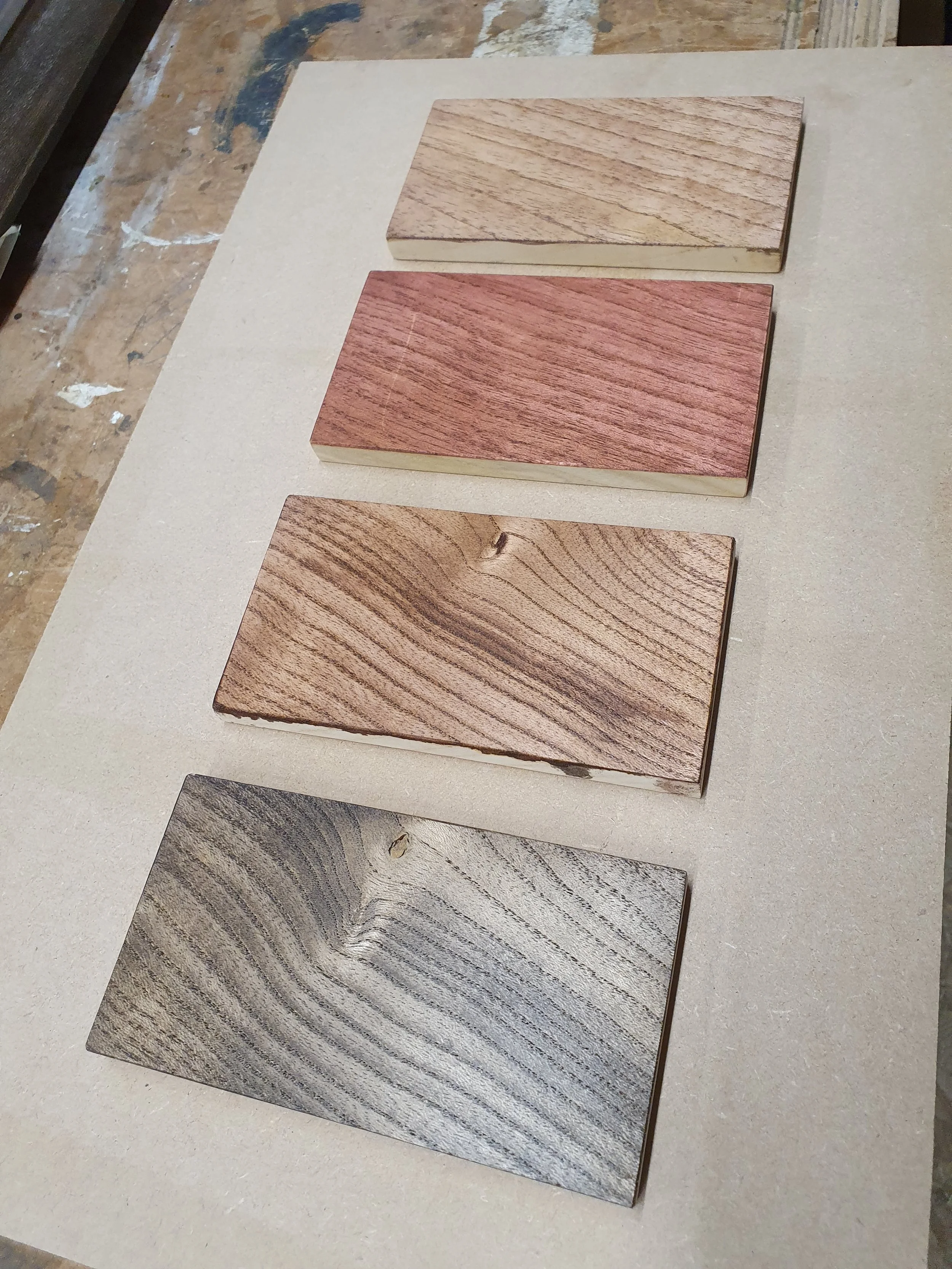
The consultation for the first piece of furniture has begun and the client would like a writing desk in dark tones, a reddish-brown colour markedly different from the natural pale of the Ailanthus timber.
I prepared several samples from the Ailanthus timber finished with oil-based stains from browns and reddish browns to reds and purples to silvery blues. The Ailanthus timber does not take water-based stains well and only oil-based products seem to work their way into the grain well. The natural colour is pale yellow white like American ash and can also be scorched very black.
All of the samples were finished off with three coats of Osmo satin.
Making samples is an art in itself and an important part of the consultation process with the client. The knowledge of the clients varies greatly but most people who come to me are either wood enthusiasts or interiors professionals who know exactly what they want, even if its not a so-called natural colour or tone. Either way, the tone and colour of the sample needs to match the piece delivered and the further away you get from the natural wood tone the more important it is.
Always make a few samples from different part of the timber to see if the stain or finish penetrates the wood in the same way and make careful notes of which cut or part of a board works with that finish.
Writing Desk
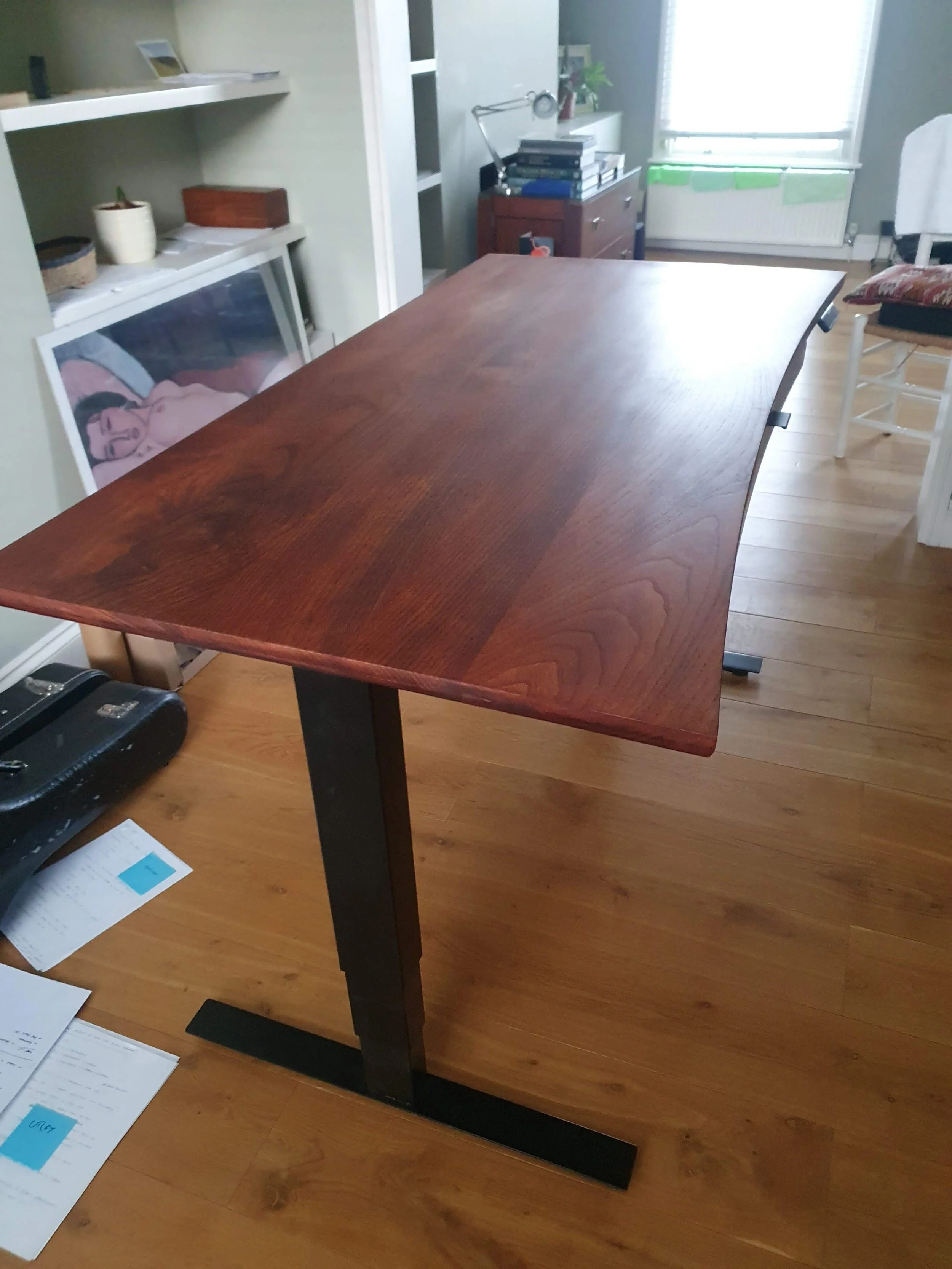
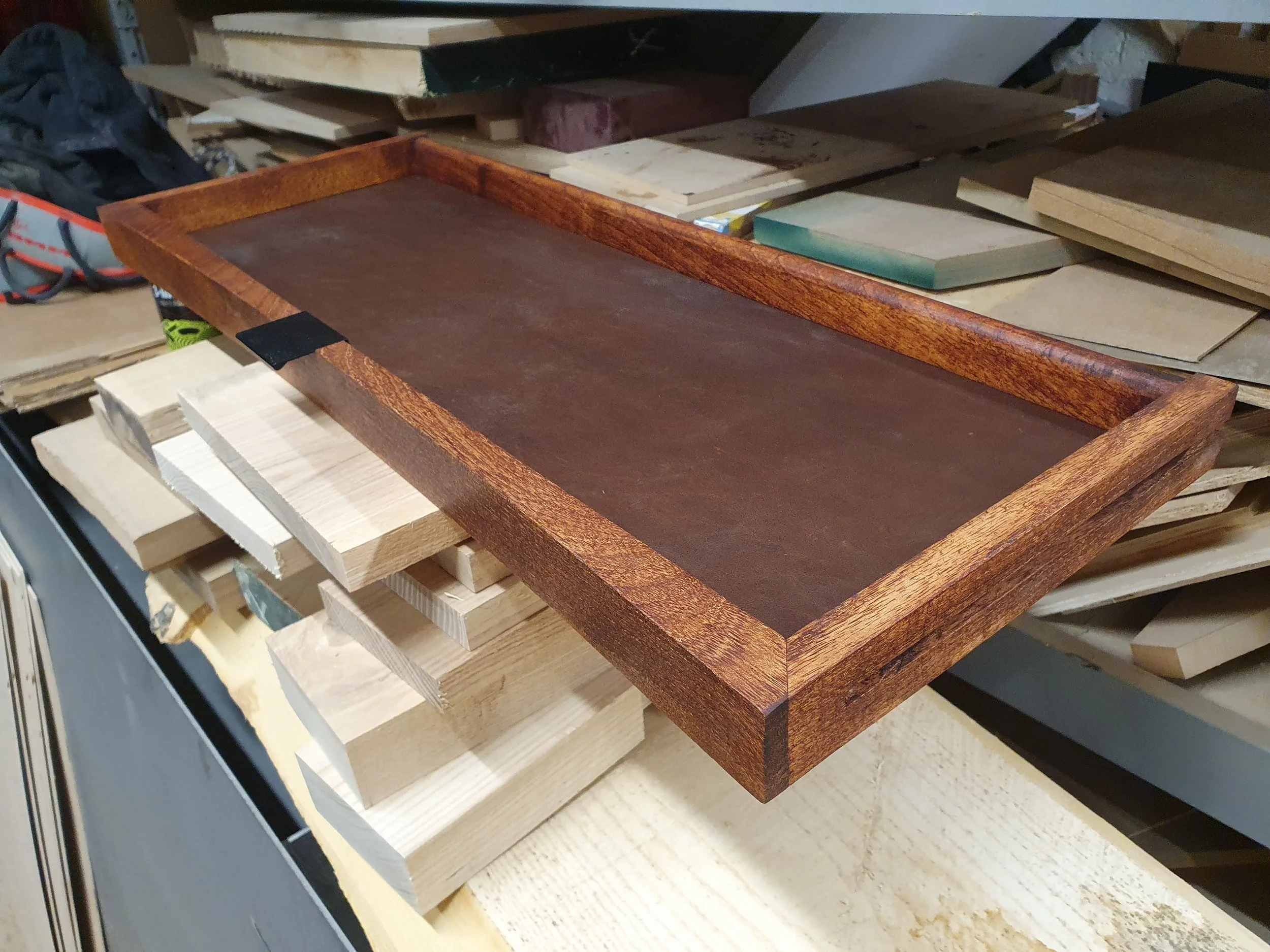
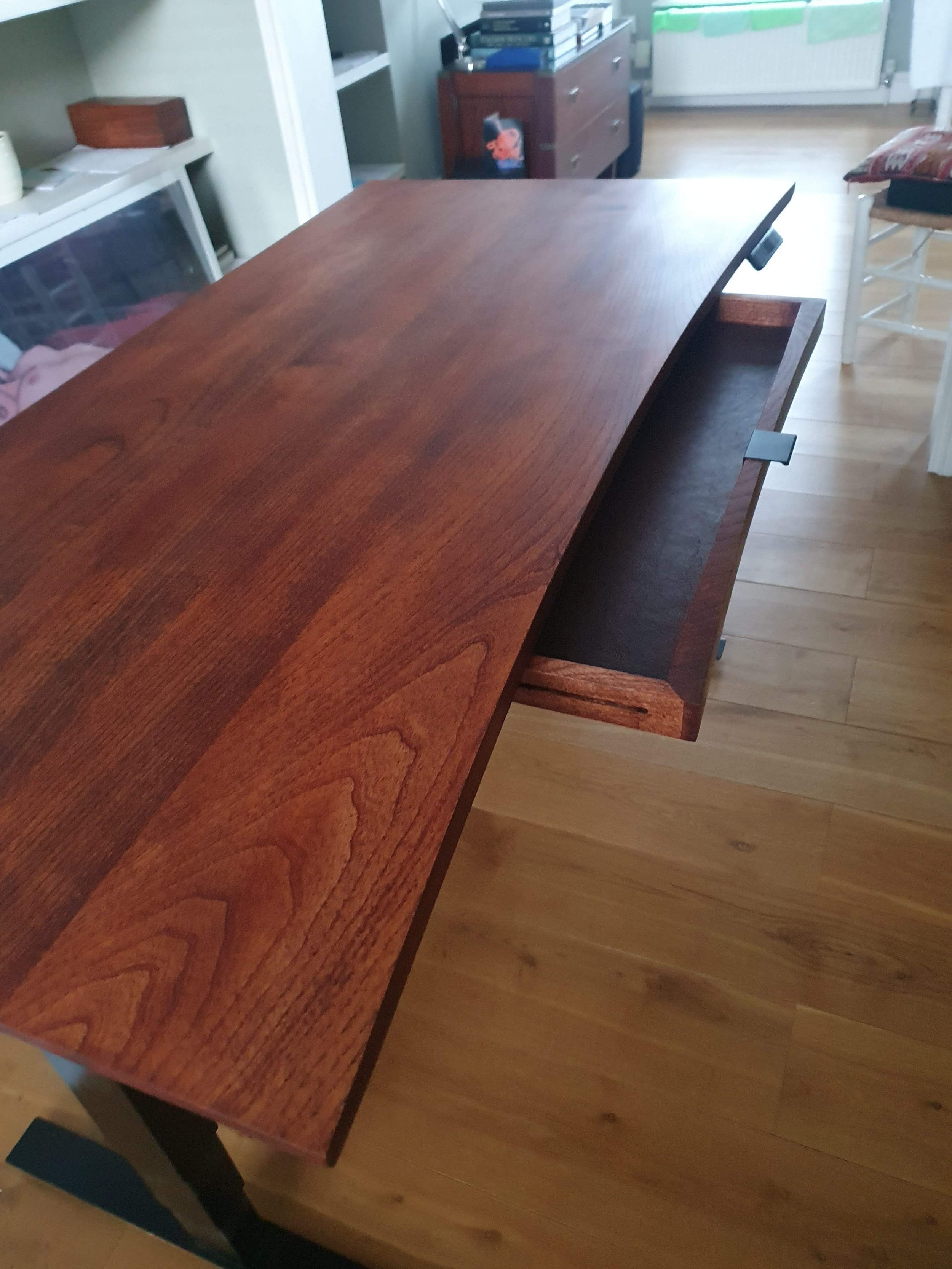
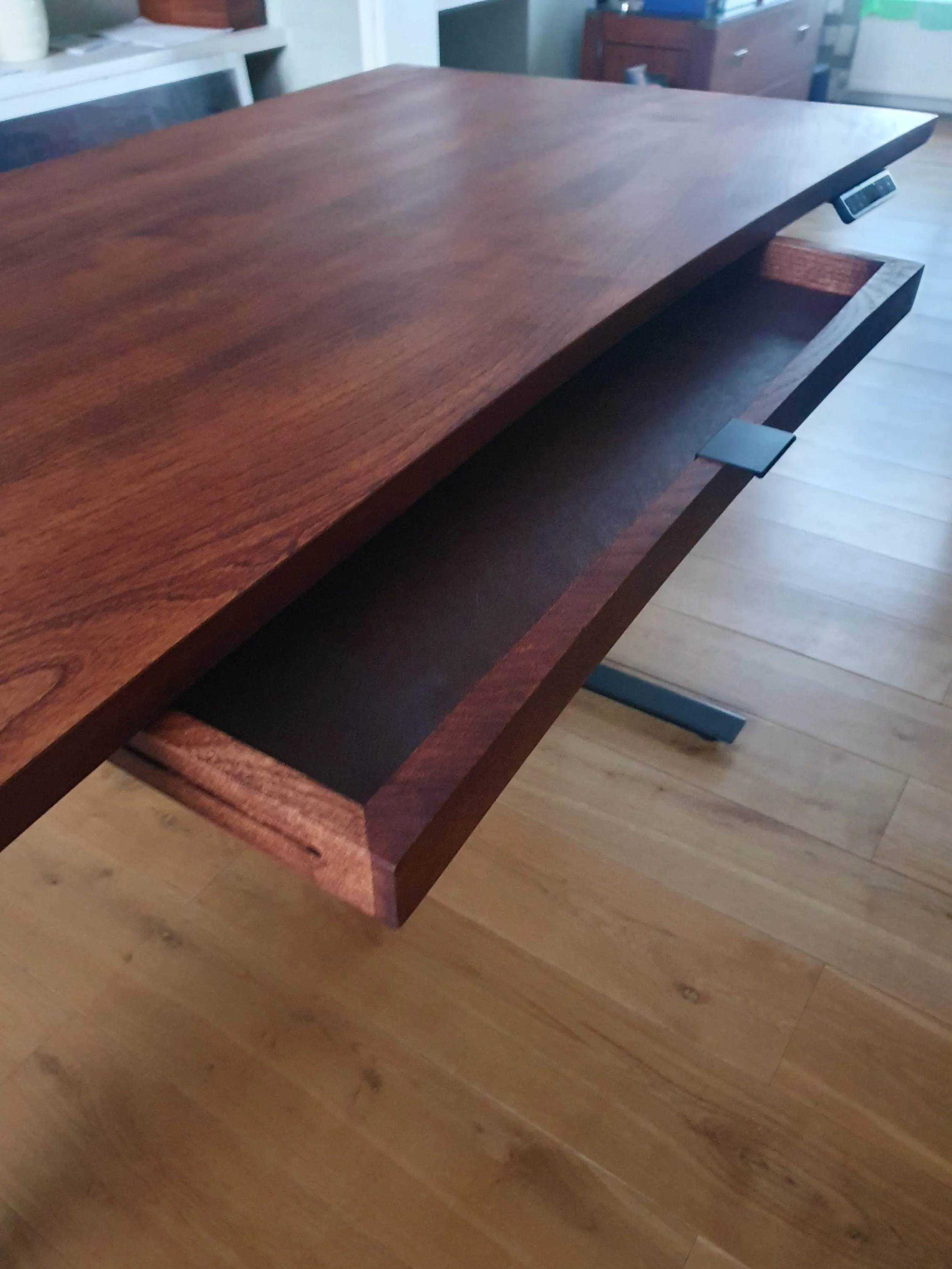
The first piece to be made in the project is this writing desk, made from stained Ailanthus timber and black metal legs. The desktop is curved at the front with a single leather lined drawer, also curving along its front. At the rear of the desktop is a full length cable tidy mounted underneath.
All the wooden components are mounted on powered adjustable height legs. The client is a very tall gentleman, a professional mathematician who works at least 50% of the time on his feet so this mechanism worked well into the final design.
Turning & bowls
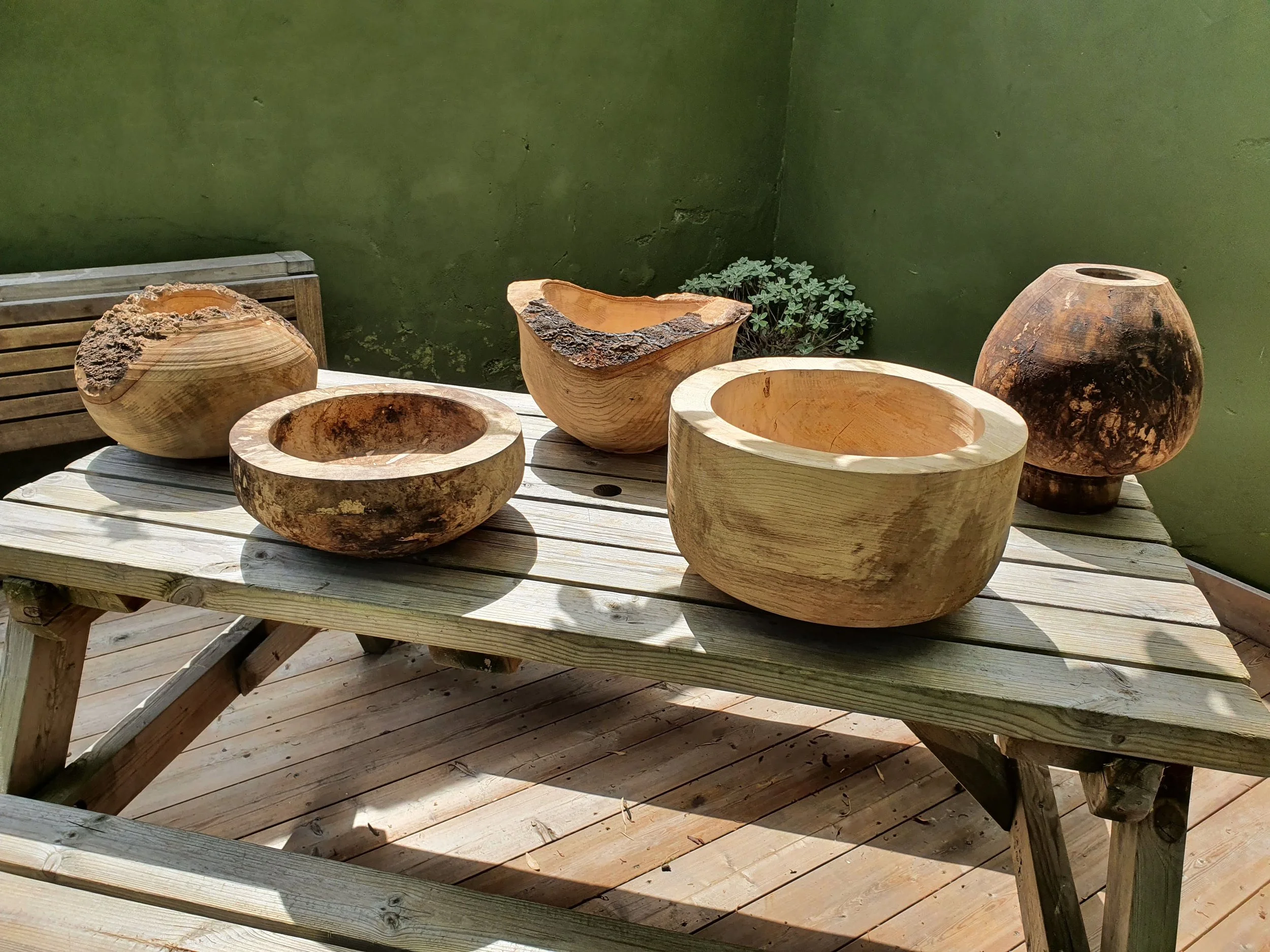
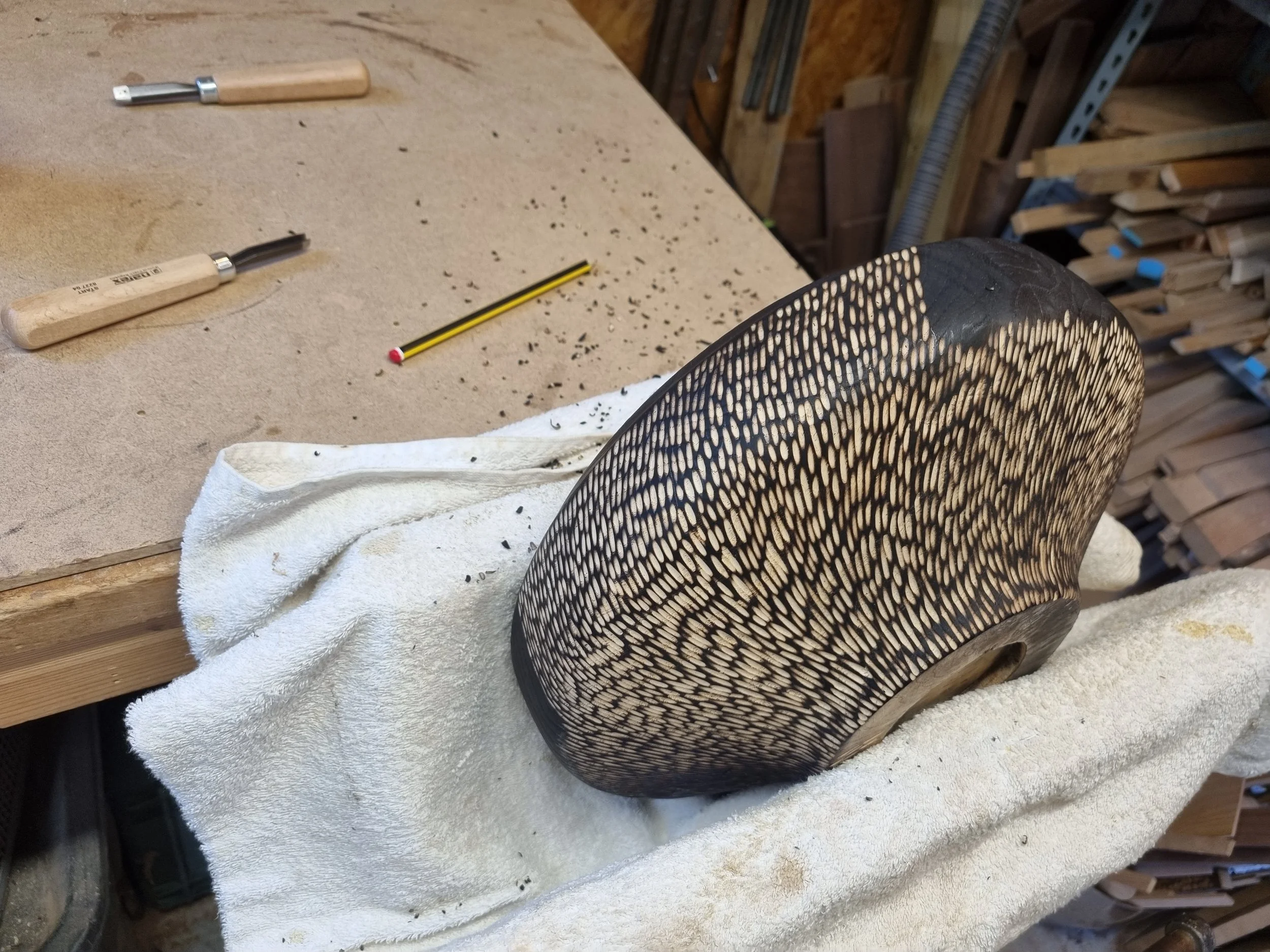
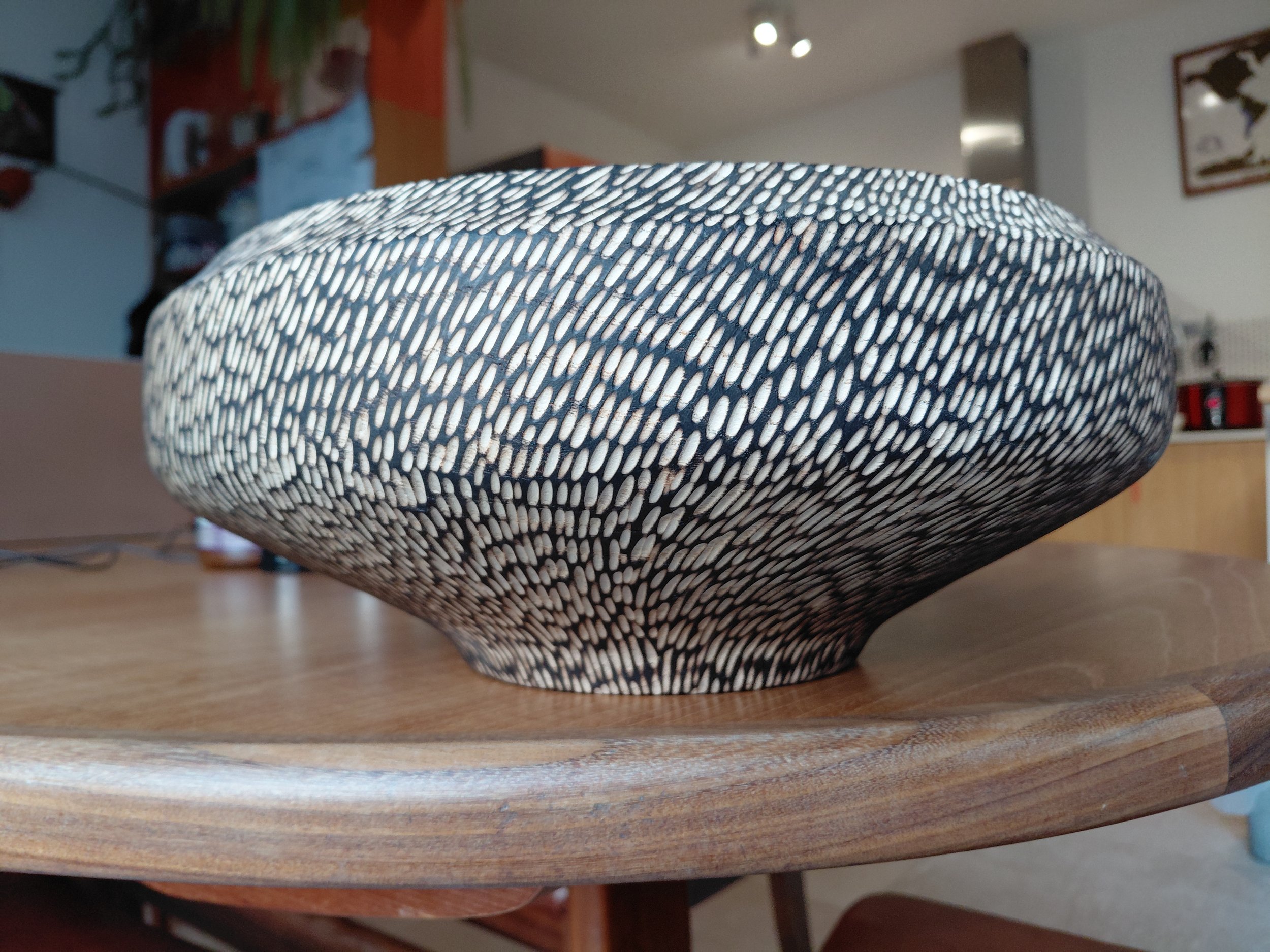
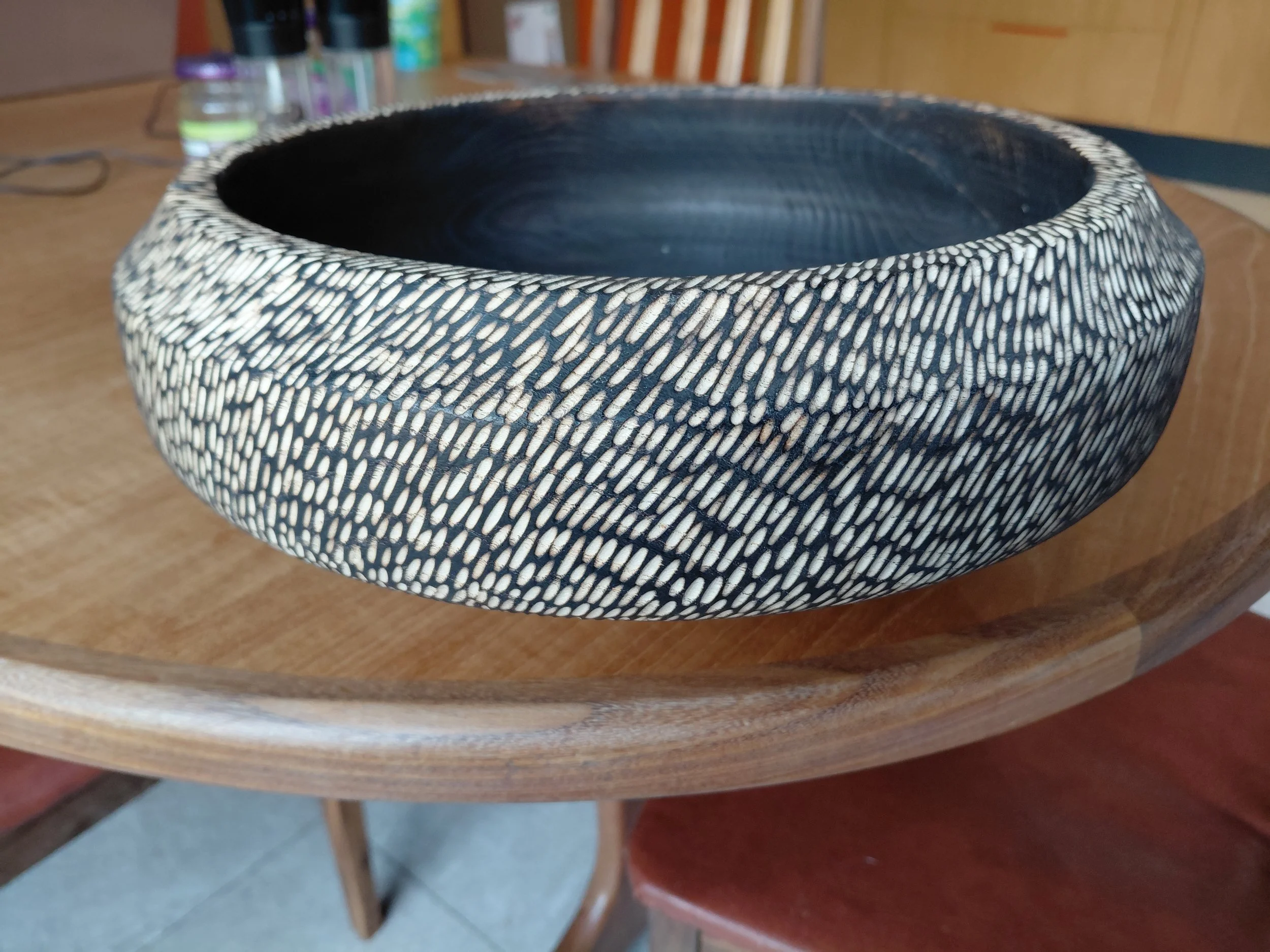
Then we turned the now kiln dried bowl blanks that we roughed out the previous May. They mostly survived the kiln and the drying process without any large cracks or distortions. They looked beautiful with potential spalting on some and at least some colour variation in the otherwise yellow to white Ash like paleness.
Most of the Ailanthus trees’ long trunk will find appropriate use in furniture table tops etc but I was keen to keep and use as much of the tree as possible and a great way to use the large knots, branch stumps and the like is to prepare them for the wood lathe.
The shapes we chose varied from the squat to the tall sided, some with wild, waney collars and some wild and cracked. I will endeavour to maintain their variety and individual characteristics as I finish them.
I finished turning one bowl and then when pleased with the shape, I scorched and gouged it for a contemporary look.